Data centre construction across APAC and the Middle East is accelerating. Sites are more complex, timelines are tighter, and the margin for error at commissioning is smaller than it has ever been. Yet one of the most critical steps in preparing a facility for operations is almost always planned too late.
In data centres, post-construction cleaning is not a simple clean-up activity. It is a precision-driven process that directly impacts uptime, performance and long-term asset reliability. Done properly, it prepares the environment for Integrated Systems Testing (IST) and commissioning. Done poorly – or too late – it introduces risk from day one.

What Construction Leaves Behind
Even in tightly controlled builds, construction activities introduce contamination into the environment. Typical contaminants include fine dust from gypsum, silica and concrete, metal particles and fragments, chemical residues and volatile organic compounds, and sub-micron airborne particulates.
These contaminants are not always visible. They settle into cable trays and overhead infrastructure, raised floor plenums, cooling systems and coils, and server racks and enclosures. Once infrastructure is energised, these particles cause reduced efficiency, system strain and premature failure.
The critical point: Contamination from construction does not disappear between handover and commissioning. If it is not removed through a structured cleaning programme, it goes live with the facility.
The Impact on Cooling and Performance
Data centres rely on precise environmental control to operate effectively. Contamination can restrict airflow through perforated tiles and containment systems, block cooling coils and filters, disrupt airflow balance across hot and cold aisles, and increase thermal hotspots.
The result is higher energy consumption, reduced cooling efficiency, increased risk of overheating and potential unplanned downtime. In mission-critical environments, even minor deviations can have material operational and financial impact.
What “Clean” Actually Means in a Data Centre
In critical environments, clean is not subjective – it is defined by international standards. The global benchmark is ISO 14644-1, which classifies air cleanliness based on the concentration of airborne particles. For most data centres, the target is ISO Class 8, the recognised standard for controlled IT environments.
To meet ISO Class 8, airborne particle levels must remain within defined limits – for example, a maximum of 3.5 million particles at or above 0.5 microns per cubic metre of air. While these particles are invisible to the naked eye, they have a measurable impact on cooling efficiency, equipment reliability and long-term asset performance.
“In a data centre, clean is not about how the space looks. It is about whether the environment can support reliable operations from day one. Post-construction cleaning is one of the most critical steps in protecting that outcome.”
Girish A Sharmaa
Senior Vice President
What a Professional Process Looks Like
Post-construction cleaning is a specialised, multi-phase process designed to restore the environment to pre-IST and commissioning-ready conditions. A structured programme typically includes:
- High-Level and Structural Cleaning
- Cleaning of ceilings, lighting, cable trays, pipework and overhead infrastructure using HEPA-filtered equipment to prevent redistribution of particles.
- Rack and Equipment Preparation
- Careful cleaning of racks, cabinets and containment systems using ESD-safe methods to protect sensitive environments.
- Raised Floor and Subfloor Cleaning
- Removal of panels to access the plenum space, eliminating hidden contaminants that impact cooling performance.
- Airborne Particulate Control
- Use of air scrubbers and filtration systems to reduce particulate levels across the environment.
- Validation and Readiness Checks
- Verification that the environment is suitable for IST and commissioning, aligned to required cleanliness levels.
Why Contamination Control During Construction Is Not Enough
Many projects rely on containment measures during build phases – temporary barriers, sticky mats and routine cleaning. While important, these do not eliminate fine and sub-micron contamination.
Containment manages risk during construction. Post-construction cleaning eliminates it before operations begin. The distinction matters because the consequences of getting it wrong show up after go-live, not during the build.
Supporting the Build
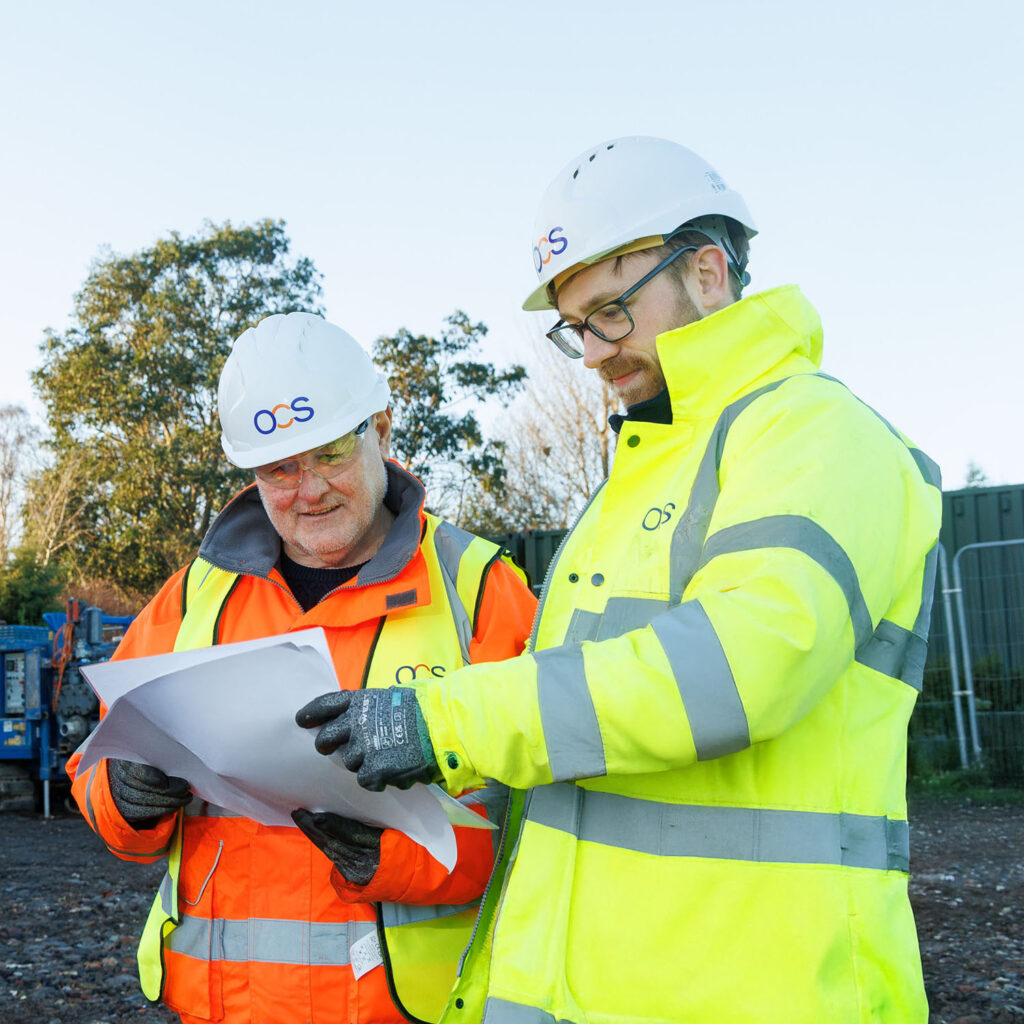
Beyond post-construction cleaning, experienced data centre service providers can also support the construction phase itself – deploying supervisory engineers and project management support to monitor contractor work on behalf of the operator and ensure standards are maintained throughout the build.
When the same provider supports both the build phase and the post-construction preparation, the operator benefits from a single point of accountability across the entire transition from construction to live operations.
Our Data Centre Credentials
-
95 Data Centres Under Management
-
12 Years of DC Operational Experience
-
10 of 15 Major Colo Operators in India
-
ISO 14644-1 Class 8 Certified Delivery
-
HEPA-filtered, ESD-safe Methodologies
-
Directly Employed Engineers – No Subcontractors
Setting the Foundation for Long-Term Performance
The condition of a data centre at commissioning determines how it performs in the years that follow. Post-construction cleaning protects critical infrastructure, enables efficient system performance and reduces operational risk from day one.
For many of the operators we work with, post-construction cleaning is where the relationship begins. The same team that prepares the environment for commissioning goes on to support ongoing whitespace cleaning, hard and soft FM, and the specialised services the facility needs as it matures.
It is not the final step in construction. It is the first step in reliable operation.