DE&I | Security

Action Over Attendance: What OCS’s Women in Security Event Set in Motion

OCS Team

OCS Team

24 Mar, 2026

Action Over Attendance: What OCS’s Women in Security Event Set in Motion

Gender equity in security has been discussed at conferences, cited in annual reports, and included in diversity strategies for years. The gap between stated commitment and real change remains significant. Closing it requires more than good intentions: it needs structured action, honest dialogue, and the discipline to follow through once the event has ended.

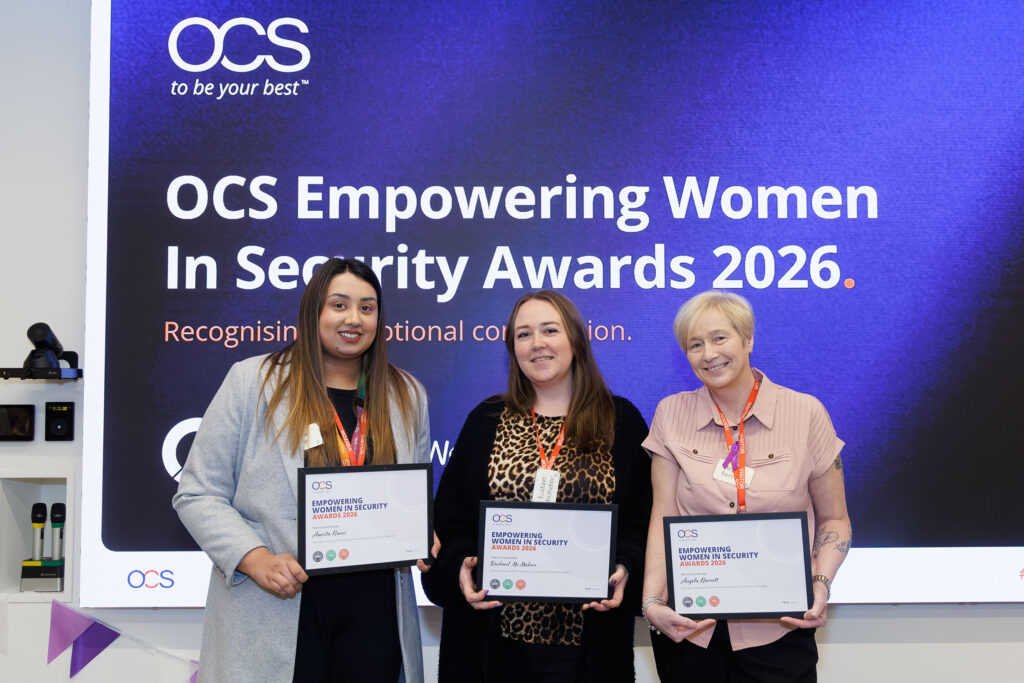
On 6th March 2026, OCS gathered security professionals from across its operations for a Women in Security event at Capital One UK’s headquarters in Nottingham. The choice of venue reflected the purpose of the day. Capital One UK, a client committed to this agenda, hosted the event there as a deliberate message that the work ahead spans organisational boundaries.

Why Cross-Sector Mattered

Attendees ranged from frontline colleagues to senior leaders from across OCS’s security operations, including external speakers from the Department for Work and Pensions and Panic Guard. It quickly became clear that the challenges women face in security are largely similar regardless of contract type. Whether working on private sites, in construction security, or within a public-sector setting, the barriers to entry and advancement remain mostly the same.

That shared experience is important. It moves the discussion away from fixes specific to individual contracts and towards cultural and structural change with lasting potential.

A Space for Honest Dialogue

Psychological safety was a recurring theme throughout the day. Attendees highlighted the importance of being in a space where they felt comfortable to express their true thoughts. The presence of very senior colleagues alongside frontline staff facilitated this, as both groups were there to listen as much as to contribute.

The workshops surfaced barriers that rarely show up in formal DE&I strategies. The absence of women in senior and visible roles sends its own message about where the ceiling sits. Shift patterns have remained largely unchanged for decades, structured around assumptions about who does security work that no longer hold. Language embedded so deeply in the industry that it has become almost invisible does the rest: the standard SIA front-of-house licence is still formally called a door steward licence, and the sector continues to use ‘manned guarding’ as default terminology. These are not incidental details. They shape who considers a security career before any recruitment process begins.

The workshops also reinforced that this is a truly shared challenge. The same themes appeared regardless of which part of the business someone worked. That consistency is important because it indicates where efforts will be most effective.

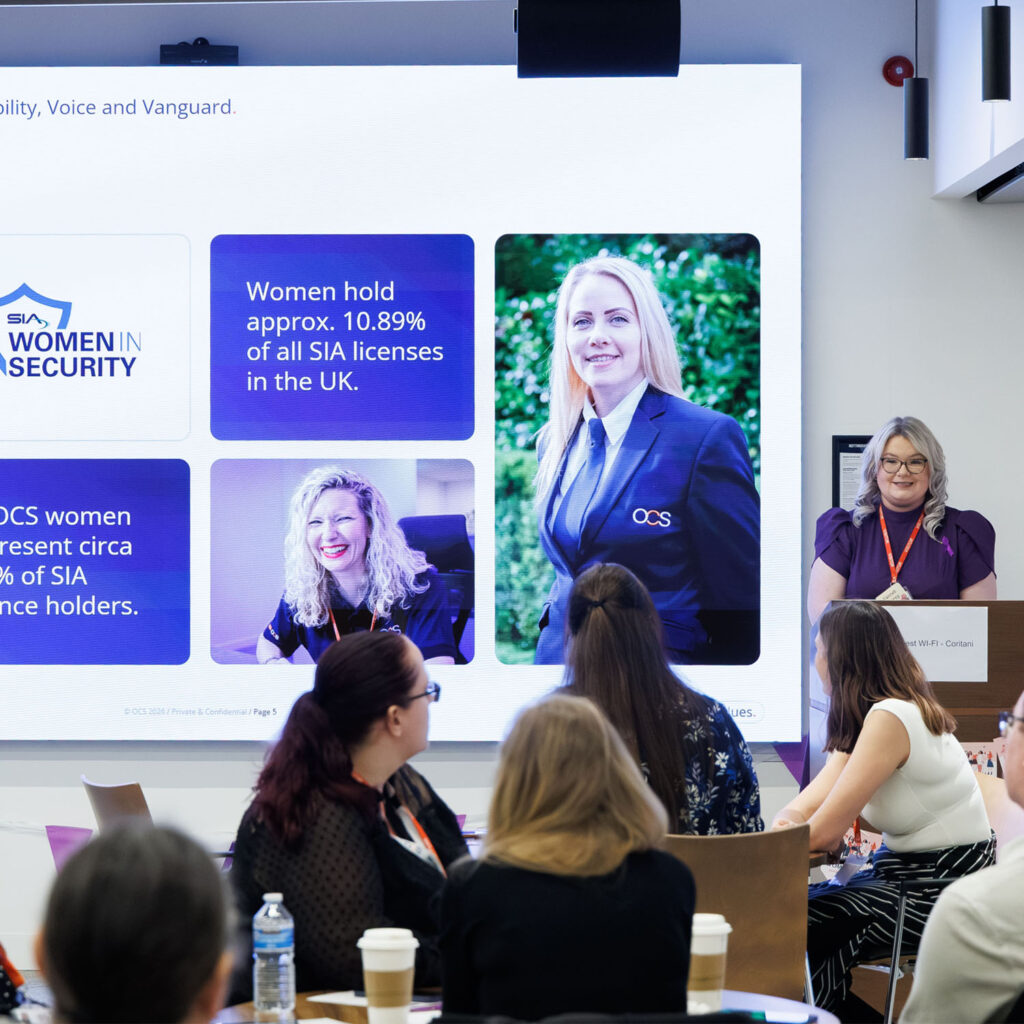
A speaker presents to an audience of women at a conference. Behind her, a screen displays information and photos about women in security, including statistics on women holding SIA licences in the UK.
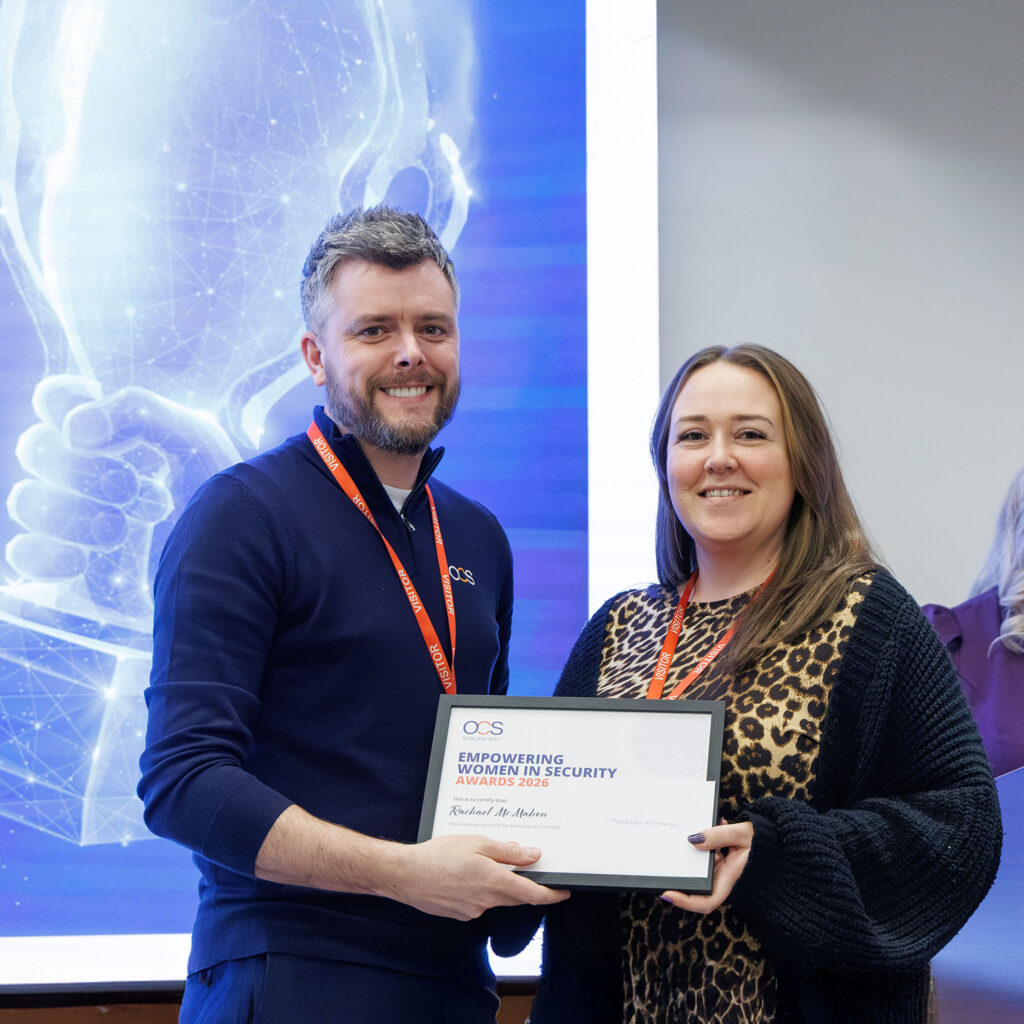
A man and a woman smiling and holding an Empowering Women in Security Award certificate. Both wear conference lanyards and stand in front of a digital, blue-lit background.

What Emerged from the Day

The sessions generated around 60 distinct ideas, proposals, and questions. These are now being reviewed and organised into a project plan, mapped against OCS’s four strategic pillars to identify where the greatest impact lies and what can realistically be prioritised. Attempting to act on everything at once is a reliable way to achieve nothing. The work now is to sequence it properly.

That process is deliberate and ongoing. It is also, by definition, not yet complete. But the direction is established.

Action That Did Not Wait

During the event, OCS launched mentoring circles at the event itself, with a group of senior female leaders leading group mentoring sessions for women in security across all levels and roles. The rationale was simple: there are not enough female mentors available to support women on a one-to-one basis, and a group model extends that capacity. The first cohort will participate in a programme lasting around five to six months. If it proves successful, the model can be scaled up.

OCS has also collaborated with DWP in Scotland on a programme aimed at helping women on career breaks to enter the security sector. This approach informs a broader strategy: practical, targeted, and aligned with the real circumstances of the people it seeks to support.

The launch of mentoring circles on the day of the event was deliberate. It served to show that the event was the beginning of a committed journey and not a one-off.


Connecting to a Wider Industry Effort

The issues identified on 6th March, ranging from licensing, language and shift patterns to the lack of visible role models at senior levels, are not problems any single organisation can resolve. Tackling them on a broader scale involves engaging the institutions and forums that influence how the sector functions. Hannah Harrop, OCS’s Head of HR for Security UK&I and one of the lead organisers of the event, is a member of WISE UK, a network that connects women across security, including cybersecurity, systems, and guarding, to collaborate on shared challenges and interact with bodies like the SIA. The goal is to channel insights from the 6th March workshops into that forum and leverage them to shape discussions at an industry level.

Adding further support, Steven Moore, OCS’s Managing Director for Security UK, sits on the core leadership committee of S12 (the Security Guarding Leadership Group), an elected industry body that works collectively with Government, the UK Security Minister, and regulators on standards, legislation, and policy issues shaping UK security guarding. That role gives the issues raised at the event a direct route into the conversations that determine how the sector develops.

OCS’s standing in the industry means it has significant influence in those forums. That is a reason for accountability, not confidence.

The Obligation Ahead

The 6th March event was valuable because of the quality of the dialogue it generated and the diversity of people willing to engage in it. It only becomes meaningful if the ideas that emerged are translated into tangible actions.

The mentoring circles are a tangible step. The project plan currently being developed is another. Over the next 12 to 18 months, the question is whether the issues raised in those workshops translate into changed practices: in how OCS recruits, how it develops people, and how it structures working arrangements for colleagues in security.

That is the standard against which the day should be measured.

Driving Change Across Security Through Action, Leadership and Collaboration

Driving Change Across Security Through Action, Leadership and Collaboration

Explore Our Security Services

Share this story