Project Context
OCS has delivered integrated facilities management services to the Scottish Courts and Tribunals Service, including the Crown Office and Procurator Fiscal Service (COPFS), since 2011. In 2024, OCS re-secured a seven-year contract, with the option to extend by a further two years, supporting 74 sites and around 490 colleagues across Scotland.
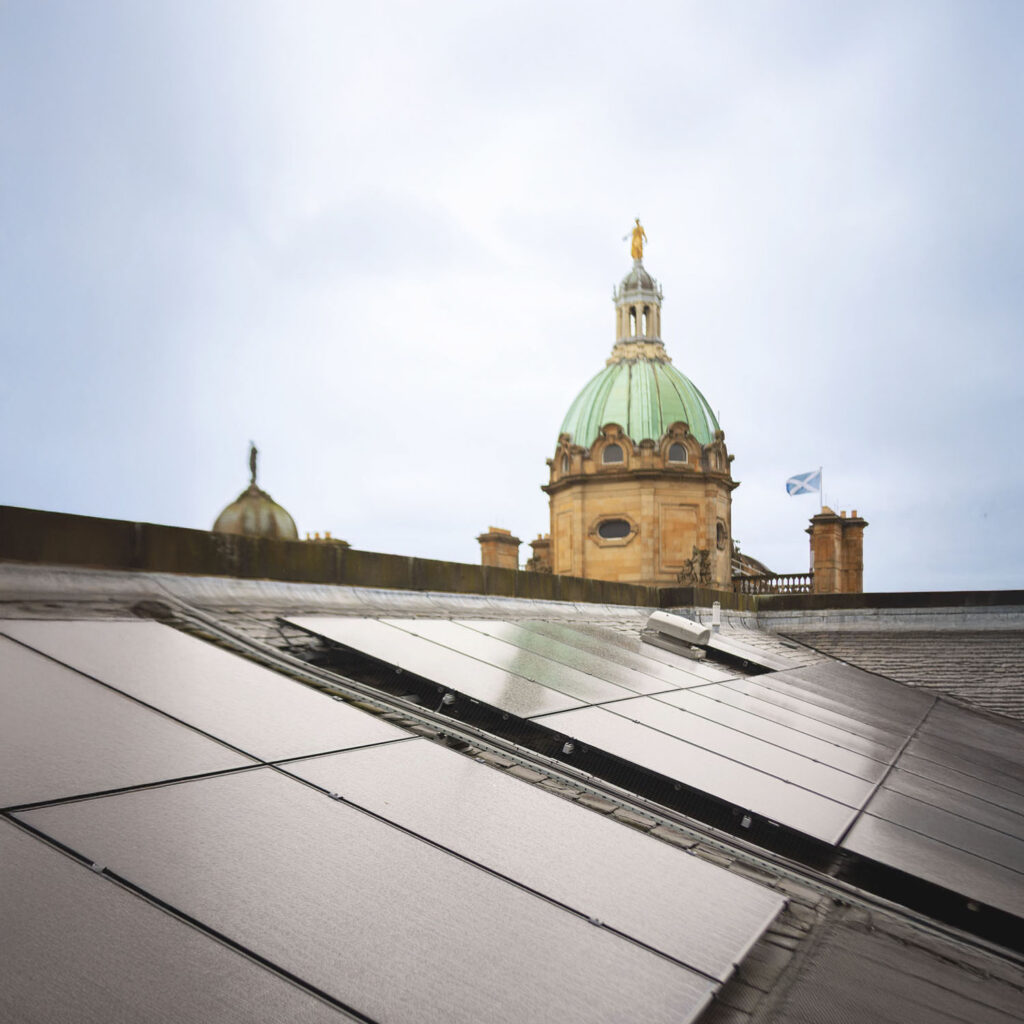
The estate spans a wide geographic and architectural range, from the modern Inverness Justice Centre to Parliament House in Edinburgh, which dates back to 1630. Approximately 87 per cent of buildings are listed, imposing clear constraints on physical interventions and increasing the importance of targeted, evidence-based retrofit planning.
Alongside day-to-day FM delivery, OCS provides energy, sustainability, and project services across the estate, supporting continuous improvement in asset performance, resilience, and long-term sustainability.
The Challenge
SCTS and COPFS needed to reduce carbon emissions and energy costs across a complex, largely historic estate while maintaining continuity of critical justice services.
Many buildings relied on ageing plant and inefficient lighting, with opportunities to further enhance controls and monitoring to unlock additional performance gains. Ambitious carbon-reduction targets were in place, but progress depended on understanding where decarbonisation would deliver the greatest impact, how quickly it could be achieved, and how to secure investment without increasing pressure on operational budgets.
A robust, defensible evidence base was essential to support funding applications and to prioritise interventions across the estate.
Our Discover Approach
OCS led a structured discovery programme to quantify the opportunity and build a credible investment case for decarbonisation.
Estate-wide energy and low-carbon feasibility audits identified initial opportunities, followed by detailed design surveys where appropriate. Reviews covered HVAC systems, lighting, building controls, metering, and fabric performance, as well as the potential for renewable generation and electric vehicle charging.
OCS worked in partnership with key experts to ensure that recommendations were technically robust and appropriate for listed and historic buildings. Building-level gas and electricity data were analysed to establish clear performance baselines, typically using the year prior to installation to enable accurate comparison.
The discovery work was aligned from the outset with the Scottish Green Public Sector Estate Decarbonisation Scheme, enabling identified opportunities to translate directly into fundable, deliverable proposals.
What We Identified
The discovery phase established a clear, prioritised pipeline of decarbonisation opportunities across both estates, as part of a wider long-term estate performance strategy.
Within the COPFS estate, two buildings were identified as suitable for full low-carbon conversion, including major fabric and window upgrades and the removal of fossil fuel heating systems.
Across the wider SCTS estate, 11 buildings showed strong potential for improved energy and carbon performance. Opportunities included solar PV installations, LED lighting upgrades, enhanced metering and monitoring, BMS control improvements, window upgrades, and replacing air handling units.
Each intervention was assessed against carbon impact, technical feasibility, heritage constraints, and operational risk, thereby supporting informed investment decisions.
Outcome
Between July 2021 and August 2023, this evidence-led approach helped SCTS and COPFS secure £15.1 million in funding from the Scottish Green Public Sector Estate Decarbonisation Scheme across four application windows.
This included £11.5 million for COPFS projects and £3.6 million for SCTS projects, enabling a multi-year programme of low-carbon retrofit across the estate.
The outcome was a robust investment case that gave the customer confidence to proceed to design and delivery, and established clear performance baselines across the wider SCTS estate against which long-term energy, carbon, and cost savings are measured.