
Project Overview
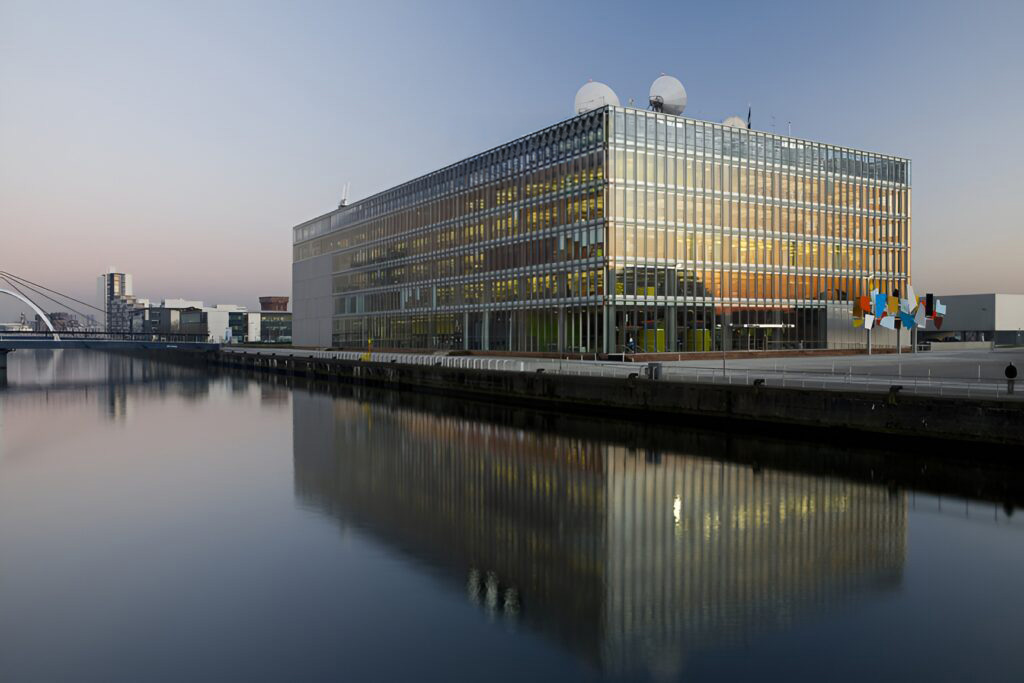
BBC Scotland operates its main Glasgow studios from BBC Pacific Quay, a critical broadcast and office facility with no tolerance for downtime. The site required a major decarbonisation upgrade to replace ageing gas boilers and chillers, while maintaining uninterrupted television and radio broadcasting throughout the programme.
The works formed part of the BBC’s wider commitment to reducing operational energy use, cutting reliance on gas, lowering embodied and operational carbon, and protecting resilience for mission-critical services.
The Challenge
Delivery took place within a live, always-on environment, where heating, cooling and domestic hot water systems support both building users and broadcast-critical infrastructure.
Key challenges included maintaining full system redundancy, coordinating complex mechanical and electrical isolations, and delivering major plant replacement works without disrupting studio operations, service yards, or satellite broadcast activity.
Low flow temperatures associated with air source heat pumps also constrained existing pipework, emitters and domestic hot water systems. Integration was required without widespread modification beyond the plantroom, placing additional emphasis on system design and sequencing.
Delivery Approach
OCS delivered the programme through a fully self-managed mechanical and electrical installation, using a phased approach that enabled the progressive removal and replacement of existing boilers and chillers while keeping the building live at all times.
Works were planned in detail to protect continuity of service, with close coordination of mechanical and electrical isolations to maintain resilience for critical systems. Crane operations were carefully scheduled to avoid disruption to broadcasting logistics, including service yards and satellite activity.
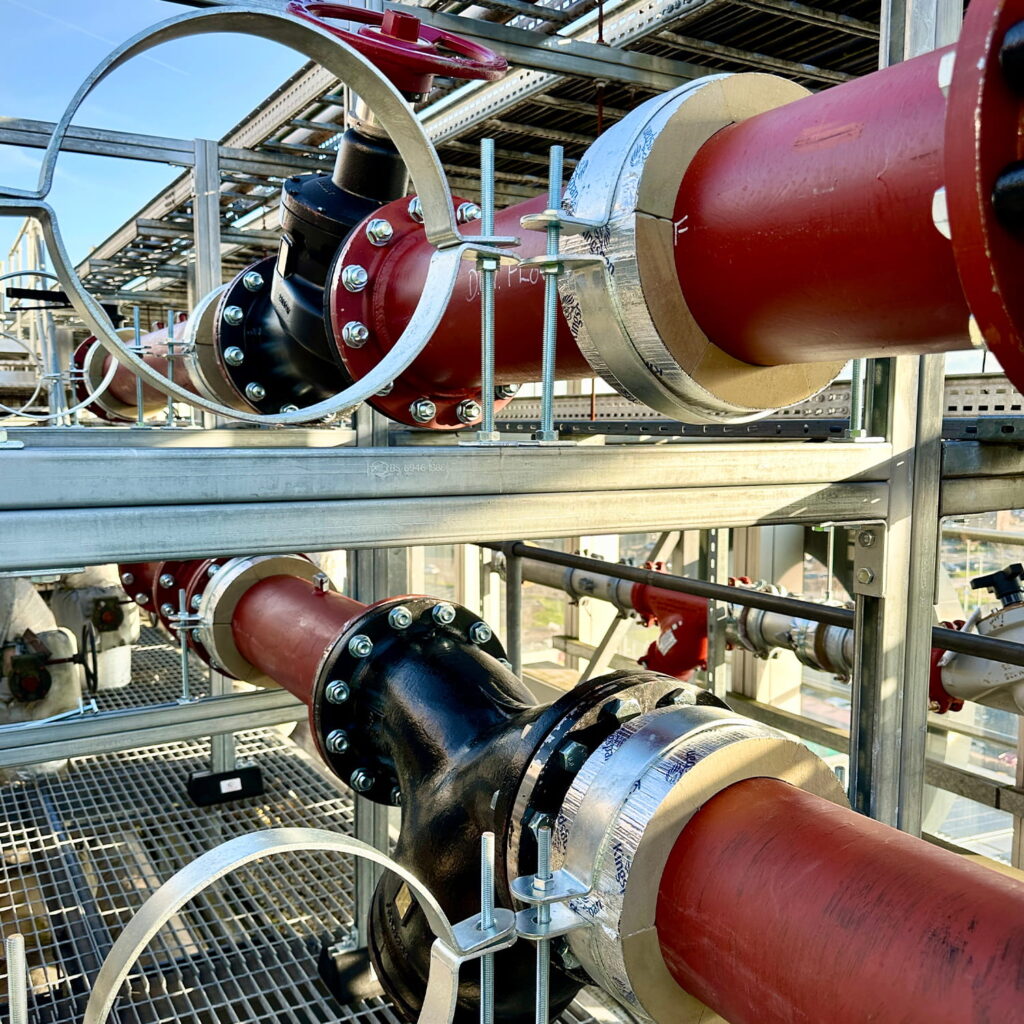
Safety and programme efficiency were improved through approved alternative pipework solutions, including lightweight grooved stainless-steel pipework externally and medium-grade steel internally. These changes reduced manual handling risk, improved safety during installation around live plant, and shortened installation time without compromising system performance or compatibility.
Delivery Solution
The programme included the removal of three 1,250 kW gas boilers, four 900 kW air-cooled chillers and associated gas-fired water heaters. These were replaced with simultaneous heating and cooling air-source heat pumps delivering 779 kW of heating and 557 kW of cooling.
To address temperature limitations, water-source heat pumps were integrated to raise low-temperature hot water from 55°C to 80°C for space heating and to 78°C for domestic hot water. This approach allowed the existing distribution systems beyond the plantroom to be retained.
The scope also included new buffer vessels, pumps, pressurisation units, BMS modifications, and electrical panel upgrades. Multiple major crane lifts were completed, including the installation of large plant and buffer vessels through the roof, all while the site remained fully operational and broadcasting.
Outcome
The project was delivered safely, compliantly and on programme within a 24-week delivery period, with no interruption to live broadcast operations.
The new low-carbon heating and cooling infrastructure is expected to reduce energy use by 27% and building carbon emissions by 38% compared with a 2019 baseline, delivering an anticipated saving of around 900 tonnes of CO₂.
By retaining existing distribution systems and maintaining full redundancy for critical services, the programme balanced decarbonisation ambition with operational resilience. The result is a future-ready energy system that supports the BBC’s sustainability goals without compromising day-to-day performance.
Key Delivery Metrics
- Project value: £2.6m
- Programme duration: 24 weeks
- Installed systems: Air source and water source heat pumps, upgraded BMS and electrical infrastructure
- Operational status during works: Fully live, zero broadcast downtime
- Carbon reduction: 38% versus 2019 baseline