A Different Way of Thinking About AI
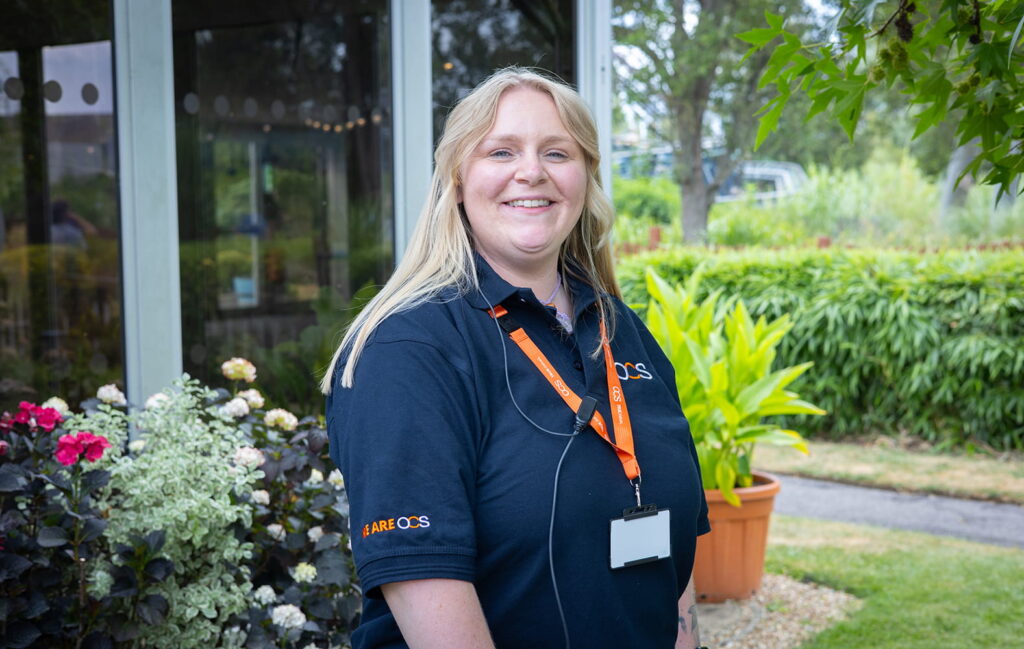
Sian’s idea grew from her experience of moving from private practice into a commercial business.
AI had largely been something she used in her personal life. In her previous role, all AI usage was forbidden. Joining OCS meant adapting to a different environment, where technology and new ways of working are increasingly part of the conversation.
“Coming into a very fast-paced, commercially driven business that embraces change and the challenges that come with it, using AI certainly felt like a big step change for me,” Sian says. She began exploring AI independently, using online resources to understand how it could be applied at work. That led her to the range of free learning available through the Government-backed AI Skills Boost platform.
The range caught her attention.
Courses are available for people who are new to AI, including learning on prompts and AI agents. Other courses are linked to specific areas of work, including project management, procurement, supply chain management and business systems.
That breadth means colleagues can explore learning relevant to their roles and level of experience.
AI is Already Part of Everyday Life
Sian’s interest in AI extends beyond her role at OCS. She is also seeing how naturally the technology is becoming part of everyday life for the next generation.
Her 10-year-old son has already started experimenting with AI himself. He used ChatGPT to learn how to make a fly trap before heading into the shed to put his idea into practice.
It made her smile. It also showed her how quickly AI is becoming part of the way younger generations learn and solve problems.
Sian has seen a similar shift with her mum, who was initially new to AI before taking part in a training course. She came away with a newfound enthusiasm for embracing it in everyday life.
These experiences have reinforced Sian’s view that understanding AI matters. As the technology becomes more familiar in homes, education and workplaces, people need to understand how to use it well and where human judgement remains essential.
Accessible training is one way to start.
Making AI More Accessible
Sian’s own experience has shown her that there can be a learning curve. She also recognises that AI needs to be approached carefully when it is used to support communications, negotiations or other work where accuracy matters.
“People need to make sure that they’re checking, make sure that it is saying what we intended to say,” she explains.
AI can provide a useful starting point. Colleagues remain responsible for reviewing the output and applying their own judgement before using it.
That human oversight matters particularly in work where communication, relationships and professional expertise are central.
“There needs to be training and a word of caution,” Sian says.
Learning That Can Support Different Roles
Sian identified introductory Microsoft courses as a useful starting point for colleagues who are less familiar with AI. She also found learning linked to Dynamics, Salesforce, procurement and project management, which could be relevant to specific teams.
Managers and teams can explore the available courses and identify learning that supports the work they do.
Within Legal, AI is already developing through the work of colleagues such as Ben Perkins, Legal Contacts Manager, whom Sian describes as highly knowledgeable and proactive in incorporating AI into everyday work life.
Her focus is broader: making sure colleagues across OCS know that accessible AI learning is available to them.
An Idea That Started With a New Colleague
Sian was surprised to be selected as the Innovation Station winner.
Being relatively new to the Facilities Management sector. Her experience shows how ideas can come from colleagues at any stage of their OCS career.
“I think also with colleagues being encouraged to submit their ideas, it makes them actually look at their role and think, okay, how can things improve and how can I help the business?” Sian says.
She believes having a route to put forward ideas can also help colleagues feel that their contribution matters.