
Aviation | passenger services

Now Globally Recognised: Sunflower Lanyard Scheme

OCS Team

OCS Team

18 Feb, 2026

Now Globally Recognised: Sunflower Lanyard Scheme

Now Globally Recognised: Sunflower Lanyard Scheme

Gatwick and OCS launched the Sunflower Lanyard Scheme as a voluntary trial at Gatwick Airport in May 2016, running through the summer before becoming an established part of the airport’s passenger assistance offer. It gave passengers with dementia, autism, hearing loss and other hidden disabilities a way to quietly signal that they might need extra time or support. The idea has since spread to airports, retailers and transport operators across the UK and beyond.

Discreet Recognition

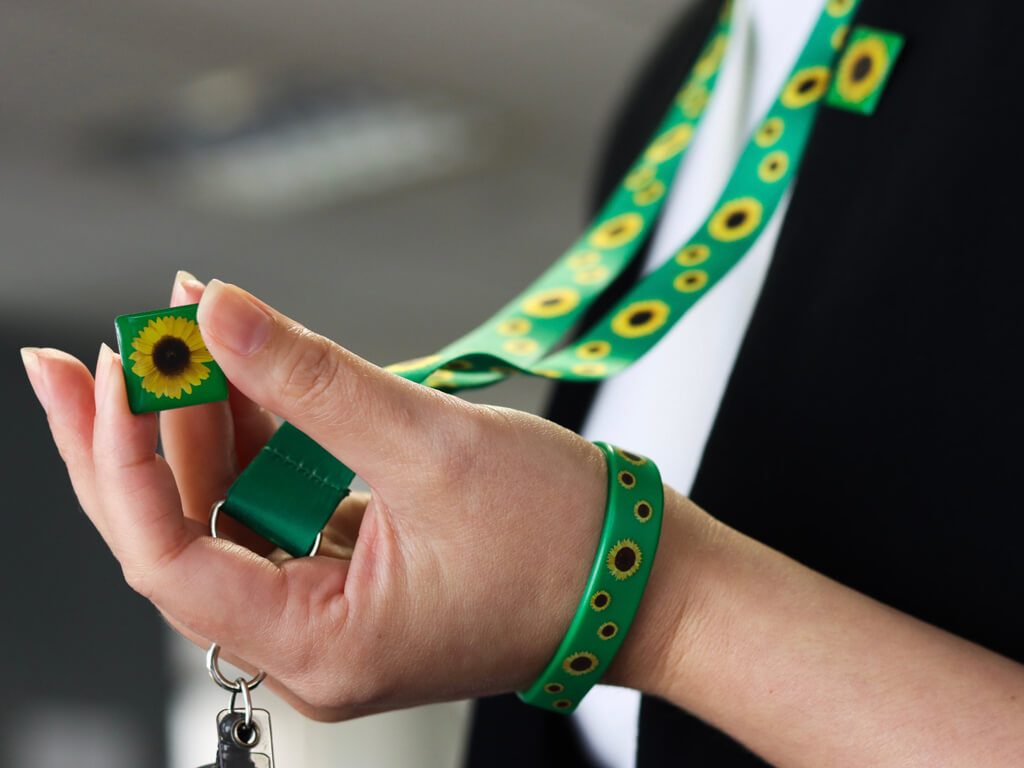
Wearing the sunflower lanyard lets a passenger signal to staff, without explanation, that they need tailored assistance. That might mean more time to process information at the gate, help with preparing belongings before security, or simply a colleague who knows to be patient. OCS assistance teams across the UK and internationally are trained to recognise the lanyard and respond appropriately.

The scheme grew out of OCS’s Challenging for Change report, which recorded the experiences of 543 disabled passengers and led to workshops that brought together airlines, airport operators, baggage handlers, disability groups and support service providers.
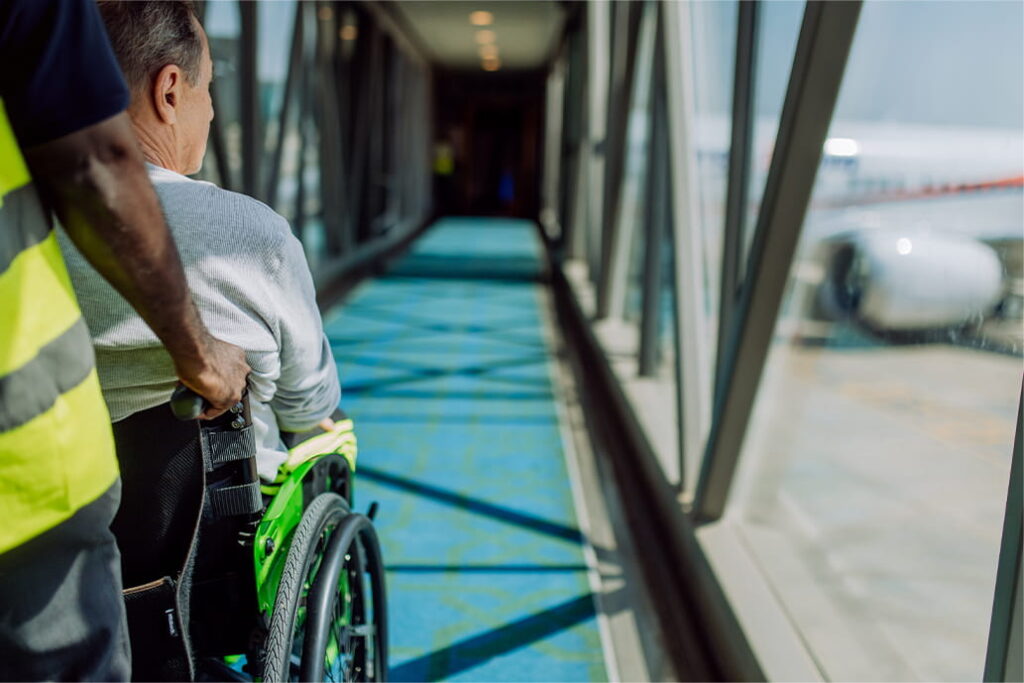
A person in a wheelchair is assisted by an airport staff member along a jet bridge towards a waiting aeroplane, seen through large windows.
Sunflower lanyard

Charity Partnership & Collaboration

The Alzheimer’s Society, The National Autistic Society and Action on Hearing Loss all worked with Gatwick and OCS on developing the scheme. Uptake was immediate: within its first year, requests for the lanyard at Gatwick rose by 47% year on year, and by December 2016 more than 3,000 passengers had requested one. That December, Gatwick and OCS were jointly presented with the Alzheimer’s Society’s Dementia Innovation Award, recognising the scheme as a genuine step forward in supporting people affected by dementia.

More than 50 colleagues across the airport trained as Dementia Friends Champions, who then trained others, and Dementia Friends awareness sessions became part of the standard induction for new starters.

People with dementia and their family carers often find travelling daunting when faced with unfamiliar and busy airports. The lanyard scheme for passengers with hidden disabilities introduced at Gatwick offers reassurance to those who use it. It also helps airport teams know that they may require additional support, which can improve the passengers’ travel experience at the airport.

avatar

Sue Rennie

Alzheimer’s Society Services Manager for West Sussex North

Specialist Colleague Training

OCS has provided passenger assistance services at Gatwick since November 2010, drawing on 60 years of aviation sector expertise. NVQ Level 2 training in dementia care is now standard for OCS teams in the departure lounges. That depth of experience is part of why the lanyard scheme, developed through genuine consultation with disability groups, has worked as well as it has.

Discover How We Make Air Travel More Accessible

Discover How We Make Air Travel More Accessible

Find Out More

Share this story