ESG | Technology

How to Electrify a Facilities Management Fleet: Lessons From the Front Line

OCS Team

OCS Team

04 Nov, 2026

How to Electrify a Facilities Management Fleet: Lessons From the Front Line

Fleet electrification in FM now shows in the order book: for the first time, OCS is ordering more electric commercial vehicles than diesel. Diesel accounts for less than 20% of the 2026 commercial vehicle programme.

“Our decisions on electrification are driven by operational data, not assumptions.”  – Paul Astbury, Head of Fleet at OCS UK & Ireland

For fleet electrification in FM to work, the data has to pick the vehicles and the driver’s experience has to be designed in from the start. Charger choice and policy follow from those two.

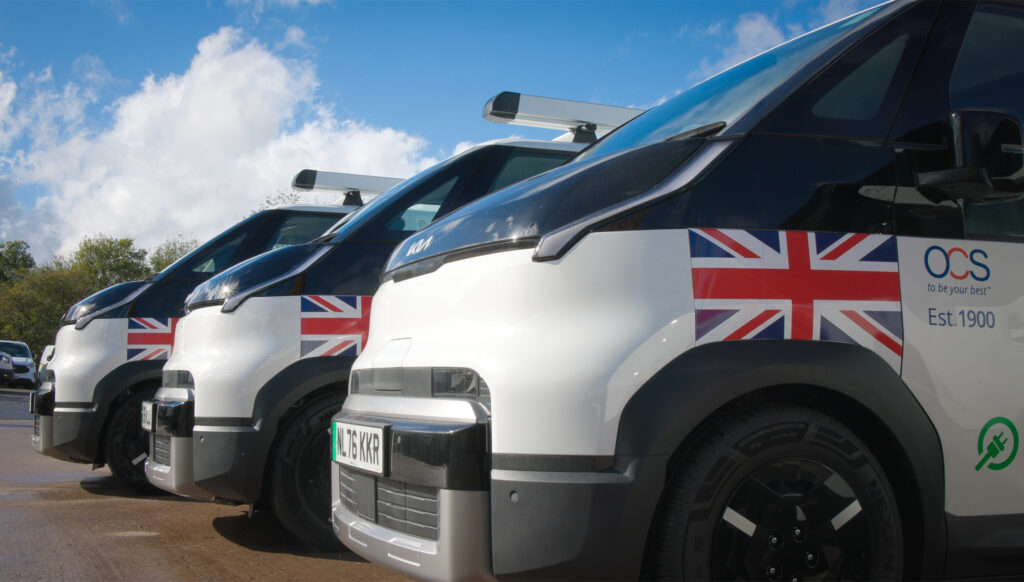
A line of parked white Kia electric vans featuring Union Jack decals and the OCS company logo.
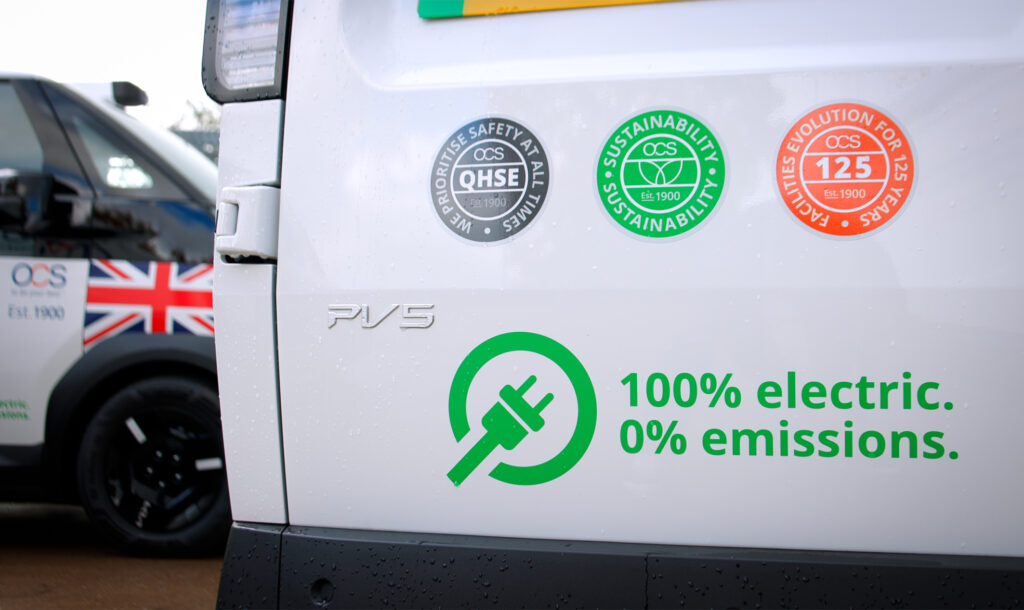
Back of a white electric van featuring a green charging symbol and text reading 100% electric. 0% emissions, with three circular OCS brand decals above.

Why Fleet Electrification in FM Is Happening

FM fleets carry engineers, cleaning teams, security patrols and supervisors to customer sites every day. Large occupiers set science-based targets and expect their FM partners to show credible reductions in fleet emissions. London’s ULEZ and Clean Air Zones in other cities raise the cost of running older diesel vans, and fuel and maintenance costs are hard to predict.

Fleet electrification in FM can lower running costs over a vehicle’s life, where the vehicle suits the job. “The shift in our order book marks a major milestone in decarbonising our fleet,” says Astbury.

Fleet Electrification in FM Starts With the Data

Telematics records mileage, trip frequency, dwell times, speed and location for every vehicle. Look at where the vehicle parks overnight and at what it costs per mile now, across several months and more than one season.

“Urban routes suit electric” is true often enough to mislead. Data produces a ranked list instead: low and predictable mileage, consistent overnight parking at a controlled site, high fuel cost per mile. Setting actual fuel and maintenance costs against projected electric costs, rather than generic averages, sharpens it further.

“We use in-cab telematics to analyse utilisation, daily mileage and operational patterns, and pick out colleagues whose vehicle use fits a defined profile: less than 100 miles a day on average,” says Astbury. “An electric van will still do just over 200 real-world miles in winter, so that average leaves plenty of headroom.”

Charging Decides the Driver’s Experience

An electric fleet depends as much on where vehicles charge as on the vehicles. FM vans often start the day somewhere other than a depot, so charging splits across the depot, the driver’s home and, occasionally, the public network. Depot charging depends on grid capacity, existing site load and landlord agreement, all of which take time. Public networks remain uneven in coverage and reliability, so they suit back-up use, not time-critical work such as emergency call-outs.

“We also prioritise drivers who can accommodate a home charging solution,” says Astbury. “It helps ensure a smooth transition and a positive experience.”

“For commercial vehicles, our home charging partners recognise when a van is plugged in, and the charging costs are identified automatically and billed back to OCS,” Astbury explains. “That removes manual expense claims and simplifies EV ownership for drivers.”

Company car drivers get a home charger too, but their charging costs remain their own responsibility.


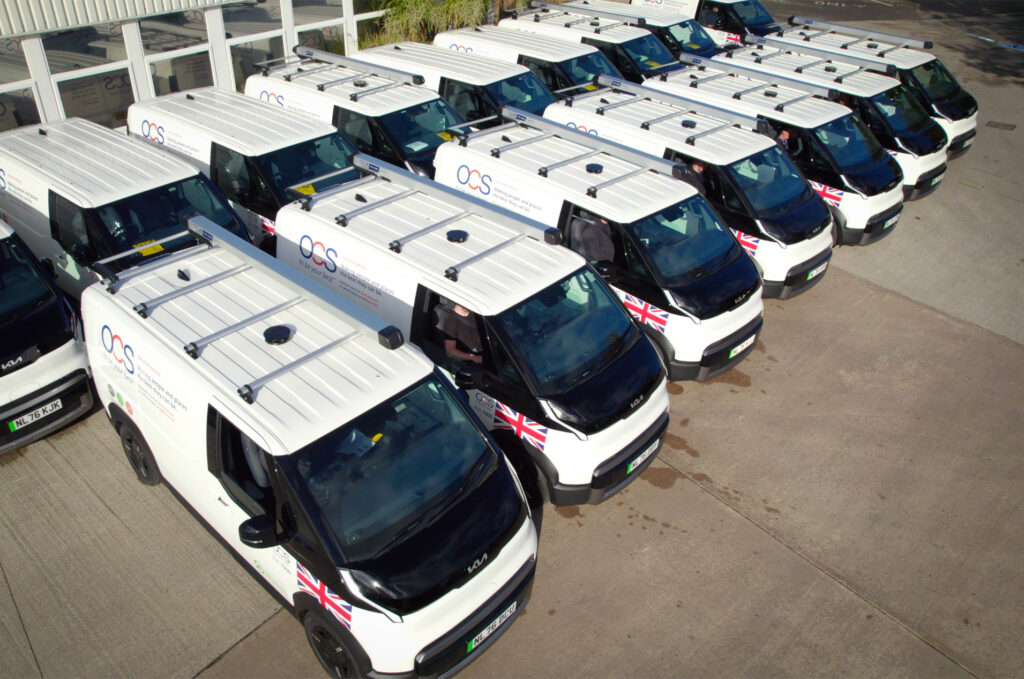
An aerial view of a fleet of white OCS branded cargo vans parked in rows on a concrete car park.
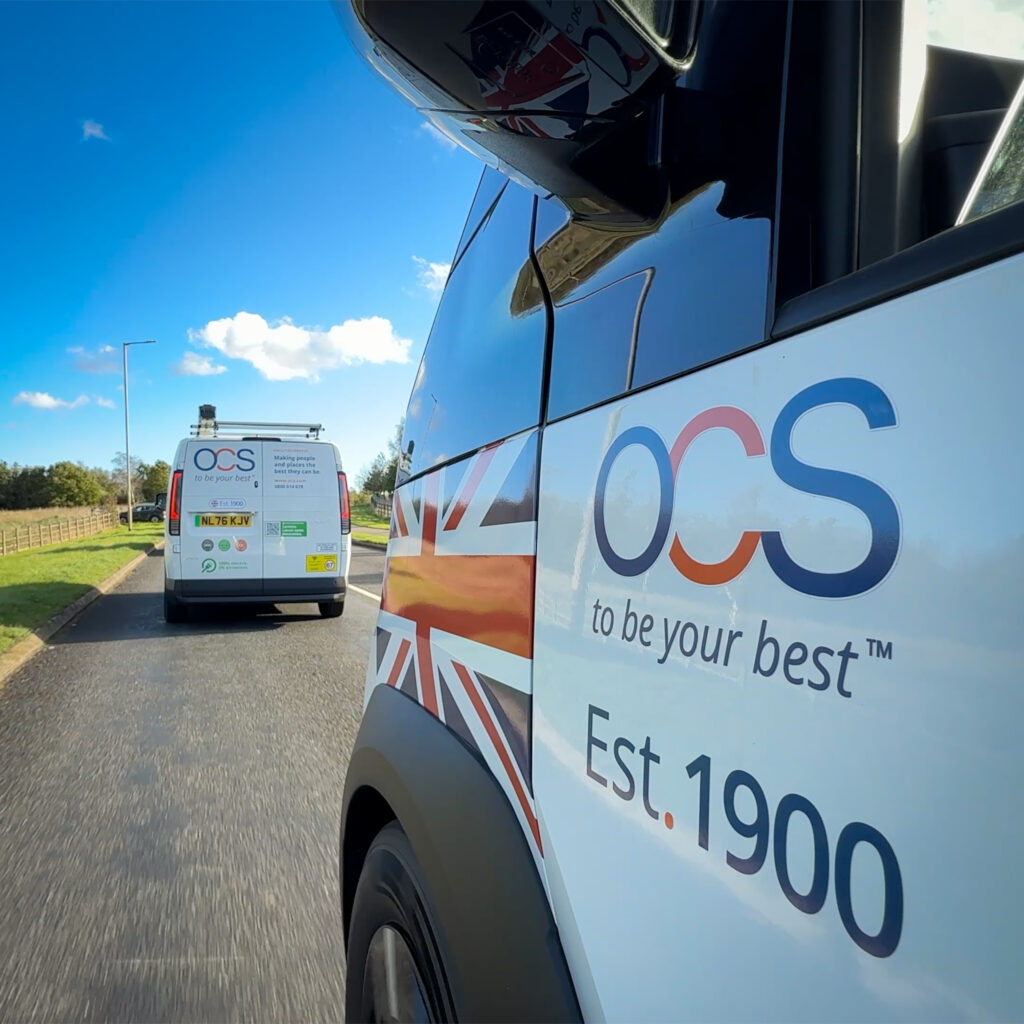
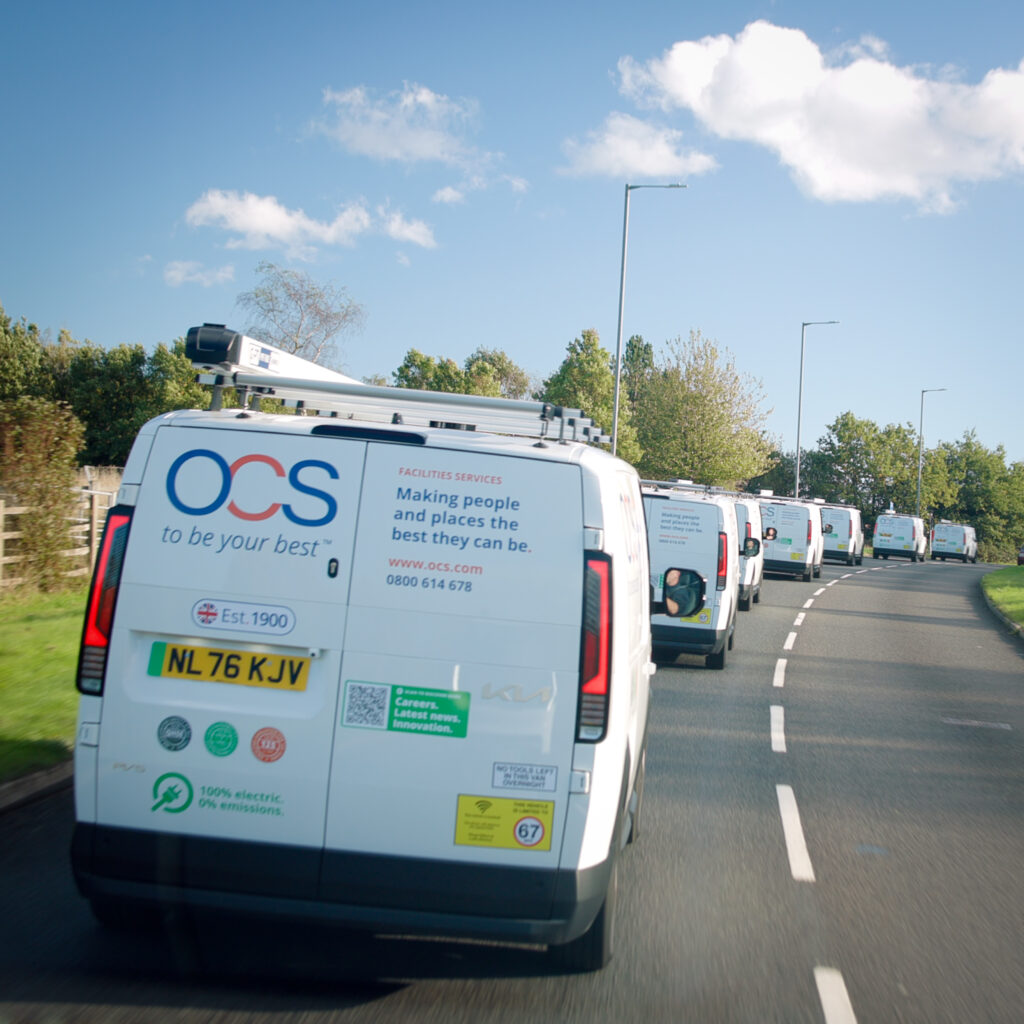
A line of white OCS facility services vans driving in a row along a sunny road.

Ask the Drivers First

OCS also invited vehicle users to opt in early. “We asked, will an EV work for you?” says Astbury. “We provide the charger and the billing technology. Around 100 colleagues came forward and said they could make it work. We sense-checked each case, and they are now moving to electric ahead of our roll-out plan.”

Match the Vehicle to the Profile, Not the Route

“We don’t do route planning as such,” says Astbury. “We rely on telematics data to pick the colleagues whose use fits the profile.”

While average mileage sits well inside real-world range, a fleet can electrify without rescheduling work around charge.

Policy and People

Company cars are further ahead: OCS has operated an EV-only company car policy since 2026, after allowing one hybrid model type to be ordered during 2025. Vehicles in every company car band now have a range of more than 300 miles. “All ICE company cars will be gone by 2027, and we will be hybrid car free by 2029,” says Astbury.

By the end of 2025, electric vehicles made up 25% of the total OCS UK fleet. In 2026, OCS launched an EV-only salary sacrifice scheme, giving colleagues a tax-efficient way to get an electric vehicle. Colleagues with everyday experience of electric driving can make the van rollout easier for those who are less sure.

Honest guidance matters as much as policy: how far a vehicle will go in winter, where to charge and what to do if the plan changes. Structured inductions on charging and efficient driving help too.

Where Electric Does Not Fit Yet

High-payload vans, vehicles that run equipment from a power take-off, long rural routes with sparse charging and sites with no spare grid capacity all limit fleet electrification in FM today. Cold weather and heavy loads widen the gap, and residual values add risk while the technology moves quickly.

“The remaining diesel vehicles are retained only where current operational requirements or vehicle availability make electrification challenging,” says Astbury.

OCS’s answer is to move vehicles between drivers. “Our aim is not to order any ICE vans in 2027,” says Astbury. “If someone’s ICE vehicle has an expiring lease and it’s still not suitable for EV, we’ll find a colleague who is suitable and doesn’t have a lease expiring this year, give them the EV and repurpose the ICE vehicle where it’s required. That erodes ICE numbers over time while technology and infrastructure catch up.”

Where to Start With Fleet Electrification in FM

Collect telematics data before ordering vehicles. Begin with colleagues whose average daily mileage sits well inside real-world range and ask them whether electric will work. Settle where each vehicle will charge and remove the paperwork for drivers. Record a reason for every diesel vehicle you keep and review it each year.

What Comes Next

Range is increasing, and the 100-mile threshold will rise with it. “From 2027 we will start to relax the 100-mile threshold and go beyond it as technology and infrastructure grow,” says Astbury.

Vehicle-to-grid technology is the longer-term opportunity for fleet electrification in FM. “We are working with manufacturers that offer vehicle-to-grid capable technology, which helps future-proof the fleet,” says Astbury. “It could unlock energy storage, grid support and integration with home energy technologies.” Choosing capable vehicles now keeps that option open.

Discover OCS Total Facilities Management

Discover OCS Total Facilities Management

Explore Our Services

Share this story