
Energy Services | Facilities Management

Turning Energy Strategy into Operational Performance

OCS Group

OCS Group

13 Mar, 2026

Turning Energy Strategy into Operational Performance

Facilities management has a direct, measurable impact on how organisations use energy and reduce carbon emissions. The performance of a building, both daily and over time, is influenced by how it is managed. That is where energy efficiency is gained or lost. 

Energy efficiency is delivered through operation. Design establishes the parameters; management decides what is actually achieved. 

How Operational Management Shapes Energy Outcomes

Buildings account for a significant share of global energy consumption, approximately 40% according to the International Energy Agency. Whether that energy is used efficiently or wasted largely depends on how building systems are operated. 

FM teams regulate the conditions that influence consumption: heating and cooling, lighting, ventilation, and asset performance. Effective management ensures systems operate as intended, adapting in real time to occupancy, demand, and external factors instead of relying on fixed settings that no longer match how a space is being used. 

The outcome is lower energy consumption, reduced costs, and enhanced environmental performance, achieved through daily operational choices rather than capital programmes. 

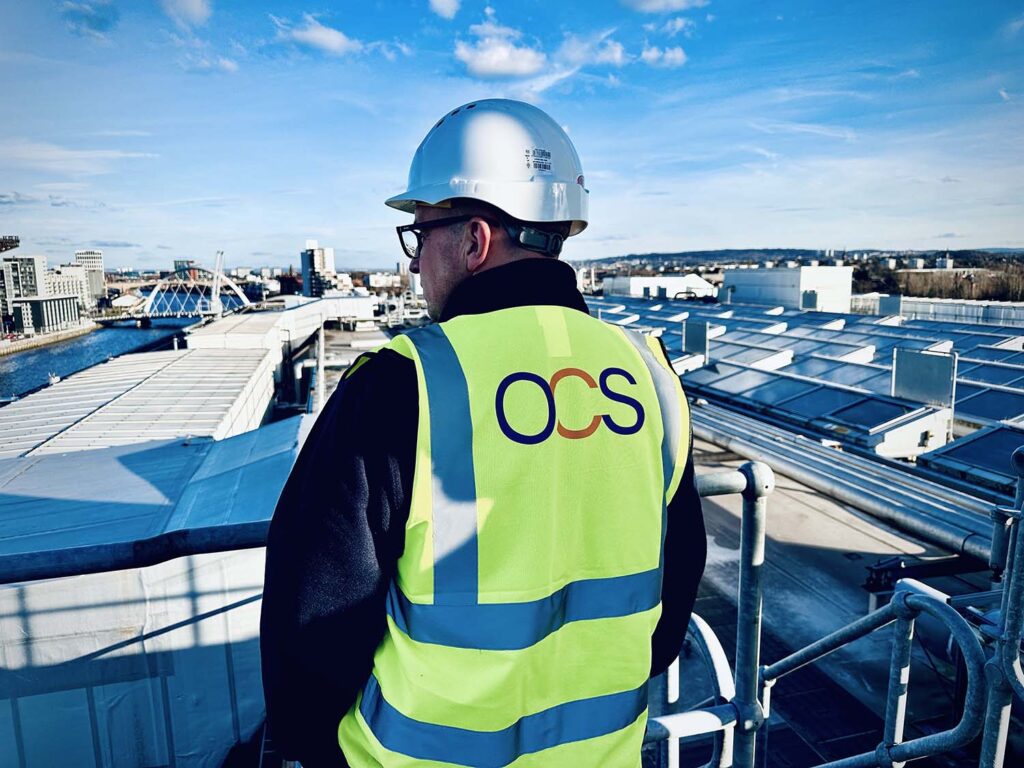
Two engineers in safety gear stand beside a laptop and equipment on a rooftop with solar panels, discussing work. A city skyline and blue sky with clouds are visible in the background.

Moving From Assumption to Evidence

Energy performance enhances when decisions are based on data. It declines when they are not. 

FM offers access to real-time and historical data across building systems, providing teams with the visibility to spot inefficiencies early, monitor performance trends over time, and act precisely. This shifts energy management from occasional reviews to a more valuable approach: continuous, evidence-based control. 

OCS employs integrated building management and monitoring within its contracts to provide customers with a clear view of energy usage, losses, and potential improvements. Accountability follows transparency. 

Supporting the Transition to Lower-Carbon Operations

The shift to lower-carbon buildings relies on how well new technology is implemented, integrated, and maintained, not just on whether it has been installed. 

Renewable energy systems, electrification programmes, and smart building technologies all require active operational management to function effectively. Without this, the gap between projected and actual carbon reduction can be substantial. FM closes that gap, linking infrastructure with daily building operations and ensuring that carbon reduction strategies achieve results in practice rather than just on paper. 

The role becomes more critical as buildings become more complex. Greater automation, more integrated systems, and elevated performance expectations all impose higher demands on those responsible for managing them. 

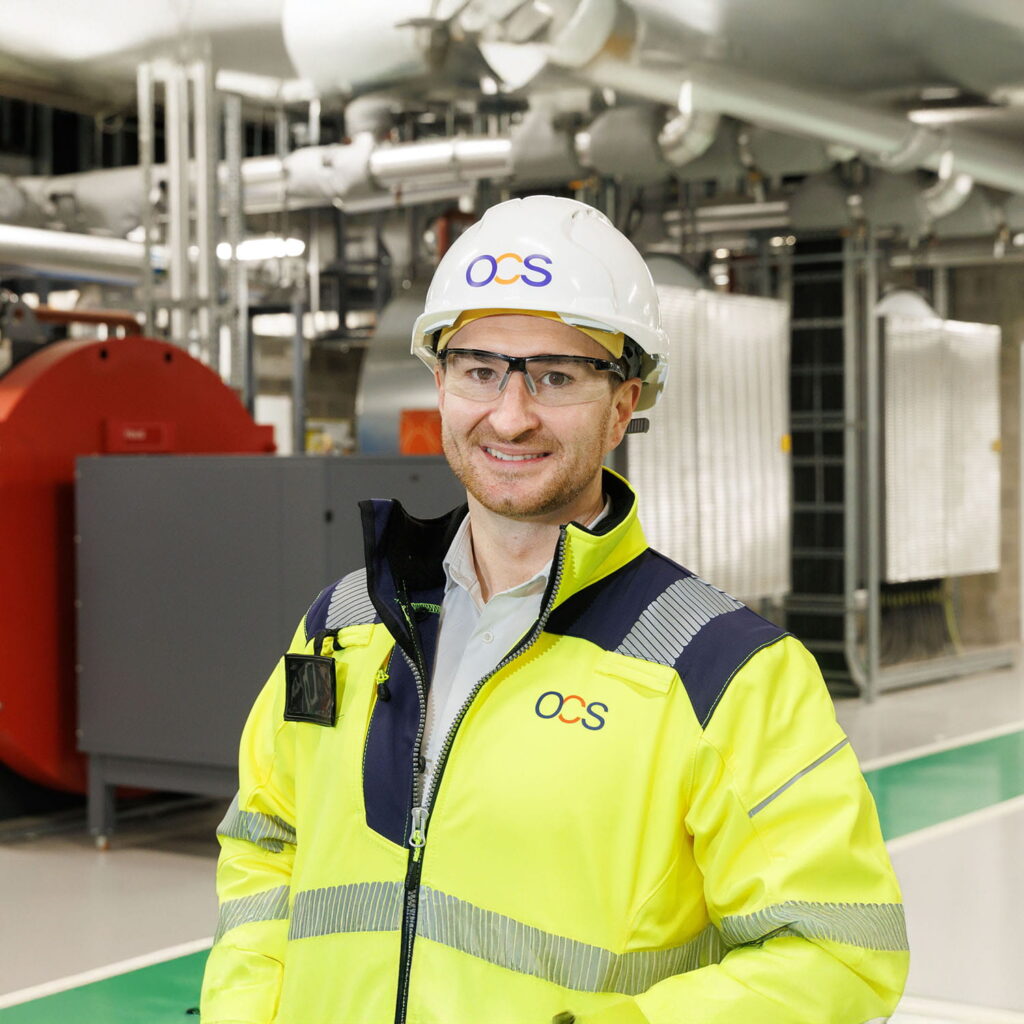
A man wearing a white hard hat, safety glasses, and a yellow high-visibility jacket stands in an industrial facility with pipes and machinery in the background. The hard hat and jacket display the OCS logo.
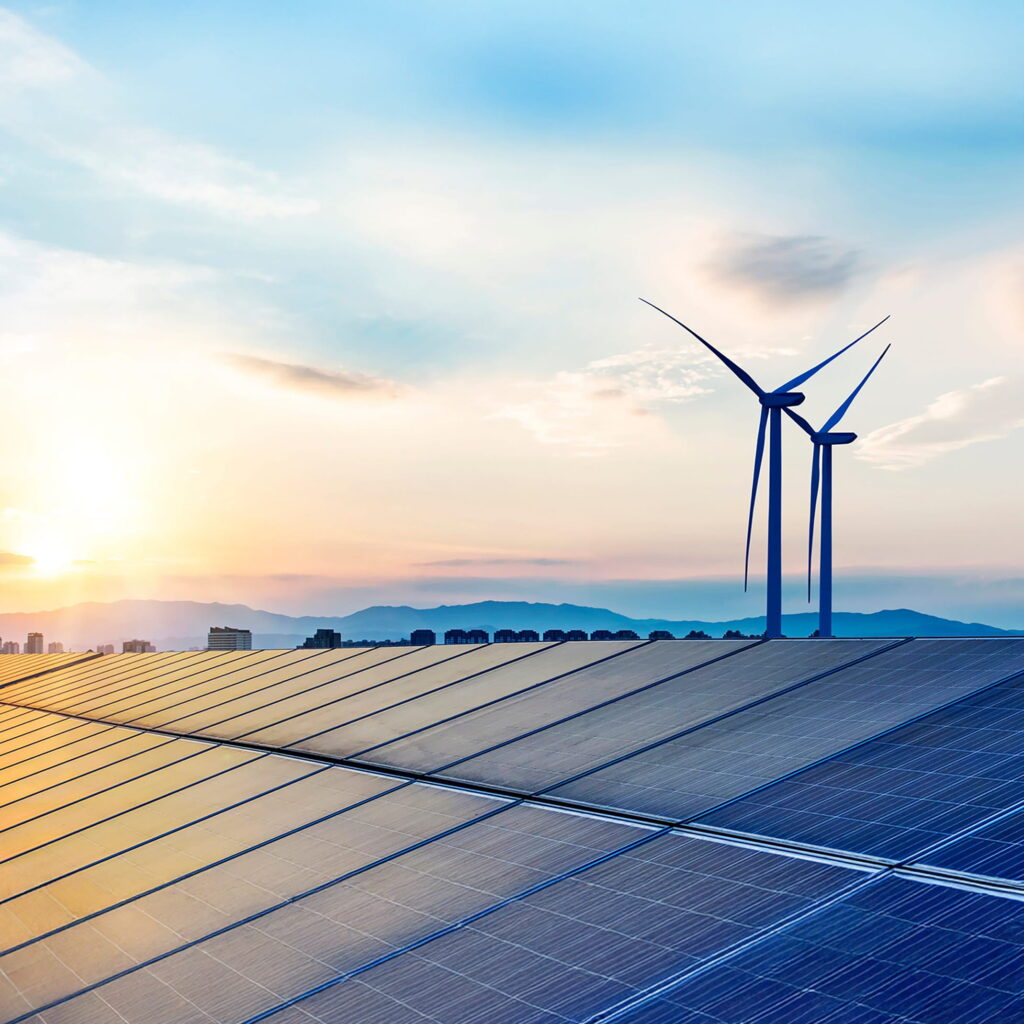
Aerial view of rows of blue solar panels arranged diagonally, forming a geometric pattern. The panels are divided by thin white lines and are installed outdoors, capturing sunlight for renewable energy.

Connecting Energy Strategy to Operational Reality

Energy efficiency needs to support wider organisational goals rather than sit alongside them. Cost control, resilience, and the quality of the environment for building users are all at stake. 

FM integrates these priorities at building level. Energy strategies that appear sound on paper can fail if they are not aligned with how a building actually functions. Operational experience is what makes strategy scalable and sustainable over time, not just in the first year of a contract, but throughout its entire duration. 

Sustained Performance Through Integrated Facilities Management

One-off interventions yield temporary results. Sustainable energy performance relies on consistency: structured processes, properly maintained assets, and colleagues who understand both the systems they manage and the outcomes they are responsible for. 

Integrated FM brings those elements together. People, technology, and sound operational practice work in combination to deliver improvement that holds. As organisations face mounting pressure to demonstrate progress on energy and carbon, the management of the built environment is where much of that progress will be achieved or missed. 

Connect with Your Local Facilities Management Team

Connect with Your Local Facilities Management Team

Find Your Local Team

Share this story