
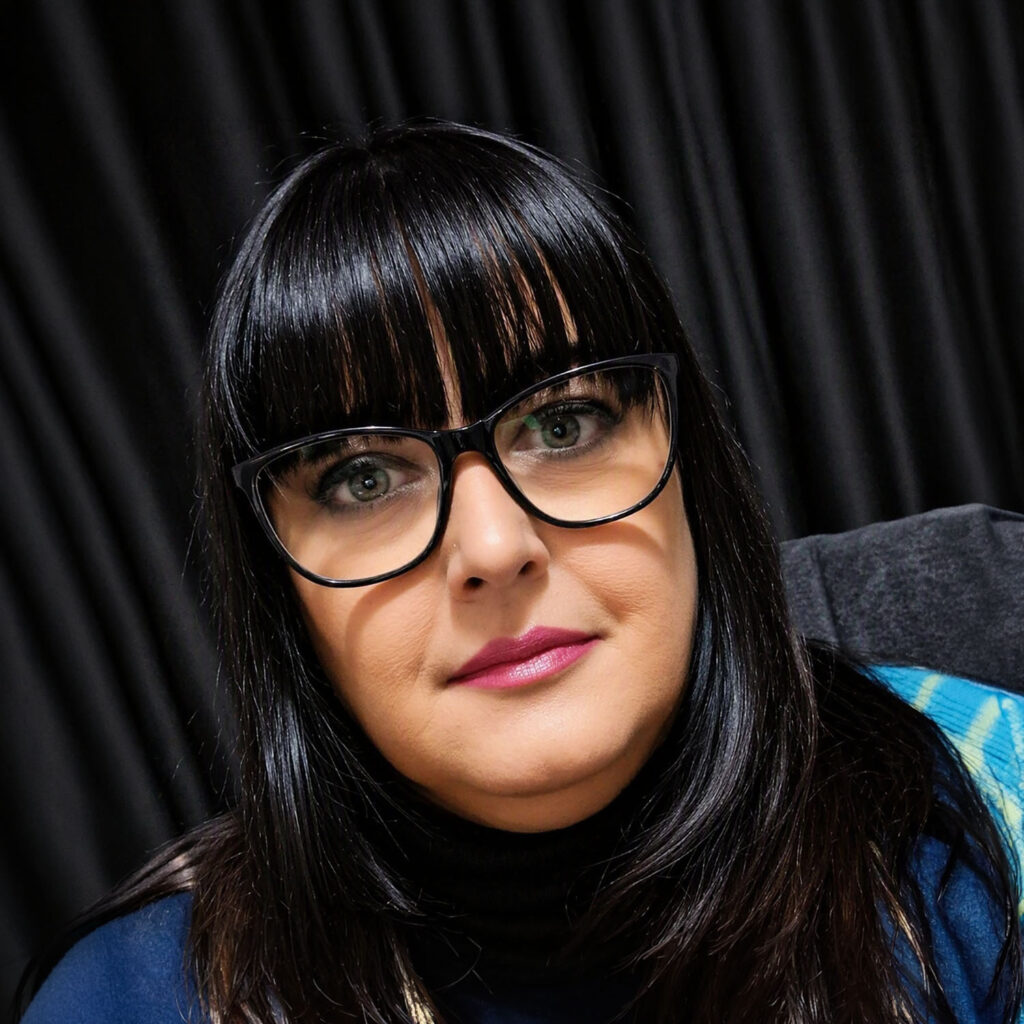
Lisa Hill, FM Coordinator at OCS, has kindly agreed to share her story to mark Disability Pride Month. Her experiences date from before she joined OCS, and she is sharing them to help others understand what people with hidden disabilities can face. She lives with two, and has learned how much damage assumptions, disbelief, and everyday interactions can do.
Two Hidden Disabilities, and One Line She Has Heard Too Many Times
The phrase that follows Lisa around the workplace is:
“Oh, you don’t look disabled.”
Sometimes people mean nothing by it. Sometimes she can tell, from the tone, the look on a face or the body language, that they don’t believe her at all.
“You learn to read a room fast. The disbelief is rarely in the words. It’s in the look that comes with them.”
FM Coordinator – Private Sector
It began in October 2001. Lisa slipped and fractured her spine while 23 weeks pregnant with her youngest daughter. At home, she was also caring for a 13-month-old daughter. She was heavily pregnant, looking after a toddler and living with a serious spinal injury.
Her manager at the time was supportive, understanding and willing to adapt her role around what she could and couldn’t do until she started maternity leave.
When a Disability You Can’t See Becomes a Target
Lisa returned to work, but the physical demands of her previous role were no longer possible because of her back injury, so she moved to a new office role with her previous employer before her time at OCS. She was looking forward to a fresh challenge.**
The new team couldn’t see her disability or understand what she had already been through. The difficulties began almost immediately.
People pushed past her. Work trays were kept at waist height and below, forcing her to bend repeatedly. Her specialist chair, provided to support her condition, disappeared. When she asked what had happened, she was told the cleaners had probably moved it. She was also questioned about why she needed a specialist chair when there was “nothing wrong” with her. She could walk. She didn’t use a stick or a wheelchair.
Lisa raised her concerns with her manager. She was told to ignore the comments because people would eventually get tired of them.
They didn’t.
After around four months, the situation had become unbearable. Lisa was signed off work for six months because of the impact the bullying had on her mental health.
During that time, letters arrived at her home written on sticky notes, calling her names. Dead flowers were delivered with a note describing her as “dead weight”. She was later told it had all been a joke.
She kept everything in a box at the back of her wardrobe and told no one.
“What hurt most wasn’t the work I couldn’t do. It was being treated as if I was lying about it.”
FM Coordinator – Private Sector
The Day Everything Broke
Lisa returned to her previous place of work on a phased programme in October 2005.
In December, without warning, she was called into a meeting with two managers and told that, after the Christmas shutdown, a process would begin to end her contract.
After that moment, she says her mind simply stopped processing what was happening. She signed two documents but still has no memory of what they contained.
The meeting marked the lowest point of Lisa’s life. That afternoon, overwhelmed by everything she had experienced, she attempted to take her own life.
She survived and, with the support of her family and those around her, slowly began the long process of recovery.
The Disability No One Can See at All
The crisis left Lisa with something that affects her daily life even more than her spinal injury: anxiety, depression and comorbid PTSD.
There is no visible sign. No walking stick. No wince of pain. Nothing that tells people what she carries every day.
One comment, depending on the tone or body language behind it, can send her spiralling. Whispered conversations are difficult, even when she knows they have nothing to do with her. Because of the whispering and note-passing she experienced, surprises are hard to manage. Her husband even warned her in advance about her own 40th birthday party.
Lisa has had more counselling than she can count. She is also honest about the gap that can exist between what organisations say about mental health and what some colleagues experience in practice.
“The disability that affects me most is the one nobody can see or hear. No stick, no wince. Just me, trying to hold steady.”
FM Coordinator – Private Sector
What Lisa Wants Colleagues to Understand
Lisa’s message is straightforward.
Treat people as individuals. The support that has helped her most has come from colleagues who simply treated her as herself, rather than seeing only her disability.
Ask questions instead of making assumptions. If someone has chosen to tell you about their disability, they would often rather answer a respectful question than have someone make an incorrect assumption.
And don’t dismiss someone’s experience.
The phrase Lisa still struggles to hear is, “Just ignore it. That’s just how they are.” When she hears those words, she often has to step away and find a quiet place to breathe.
When asked what makes her proud, Lisa’s answer is simple. She survived an experience that almost took her life. She is still here. She is still moving forward.
What Disability Pride Month Means
Asked what Disability Pride Month means to her, Lisa’s answer is simple. It shouldn’t be something people think about once a year. Real inclusion is built in the small, daily choices: the question asked instead of the assumption made, the colleague believed rather than doubted, the chair left where it belongs.
This July, OCS is continuing its partnership with disability equality charity Scope to mark Disability Pride Month, helping to raise awareness, amplify disabled voices and support inclusion for colleagues, customers and communities. The month creates space for conversations like Lisa’s. It encourages us to listen, challenge assumptions and build workplaces where everyone feels respected, supported and able to be themselves.
The marker in the calendar matters. What we do in the other eleven months matters more.
Thank you to Lisa for trusting us with her story.
Support
If you are struggling, support is available. OCS colleagues can access our confidential Employee Assistance Programme. If you are in crisis, you can contact the Samaritans free of charge, at any time, on 116 123.
** Lisa confirmed this account, including the events that took place were with a previous employer, and prior to her employment with OCS.