


Executive Summary
Maintaining safe, clean hospital environments requires the right balance of cleaning frequency, colleague time and resource efficiency.
Working with Liverpool Women’s Hospital, OCS reviewed the demands of high-footfall areas and introduced autonomous co-botic cleaning to improve productivity. By automating selected routine tasks, colleagues can focus more time on specialist and patient-supporting activities, while the hospital benefits from more efficient cleaning and reduced resource consumption.
Healthcare Cleaning Performance in Numbers
Cobotic cleaning is increasing productivity, reducing water use and giving colleagues more time for specialist hospital tasks.
-
57%
Increase in Cleaning Productivity
-
62K +
Litres of Water Saved Annually
-
366m²
Cleaned per Hour Using Cobotics
-
100%
Incident-Free Contract Record
The Challenge
Liverpool Women’s Hospital requires consistent cleaning standards across clinical areas, corridors and busy public spaces, where patient safety and infection prevention are essential.
The hospital wanted to increase cleaning frequency, improve operational efficiency and reduce the risks associated with wet floors during busy periods.
There was also an opportunity to use resources more effectively, enabling colleagues to spend more time supporting specialist cleaning requirements and hospital services.
Any changes needed to maintain staffing levels while contributing to the hospital’s sustainability and cost-efficiency objectives.
The Solution
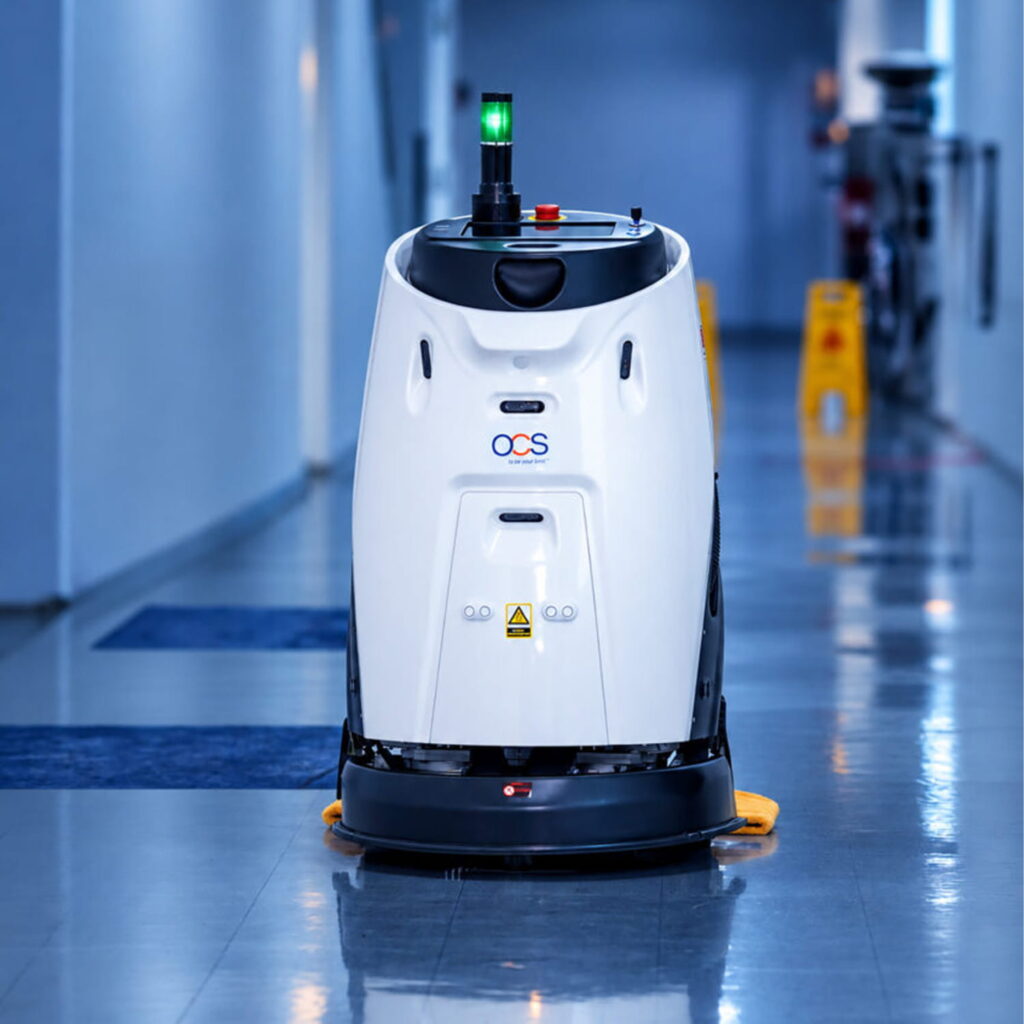
OCS reviewed the requirements of high-footfall areas and introduced autonomous co-botic floor scrubbers to improve the efficiency of routine cleaning.
The machines can clean up to 366m² per hour, enabling more frequent cleaning cycles and helping maintain safe, dry corridors during busy periods.
Automating selected floor-cleaning activities has also allowed colleagues to redirect their time towards specialist clinical support and helpdesk tasks.
The approach combines cleaning technology with the judgement and expertise of on-site teams, allowing resources to be used where they provide the greatest benefit to patients, visitors and hospital colleagues.
The new equipment also consumes less water and electricity, supporting the hospital’s environmental objectives while maintaining consistent cleaning standards.
Best Outcomes
Liverpool Women’s Hospital can make better use of its resources to maintain safe, clean environments and support patient care. Understanding cleaning requirements and applying technology where it adds value has improved operational productivity, releasing colleagues to focus on activities that matter most to the hospital.