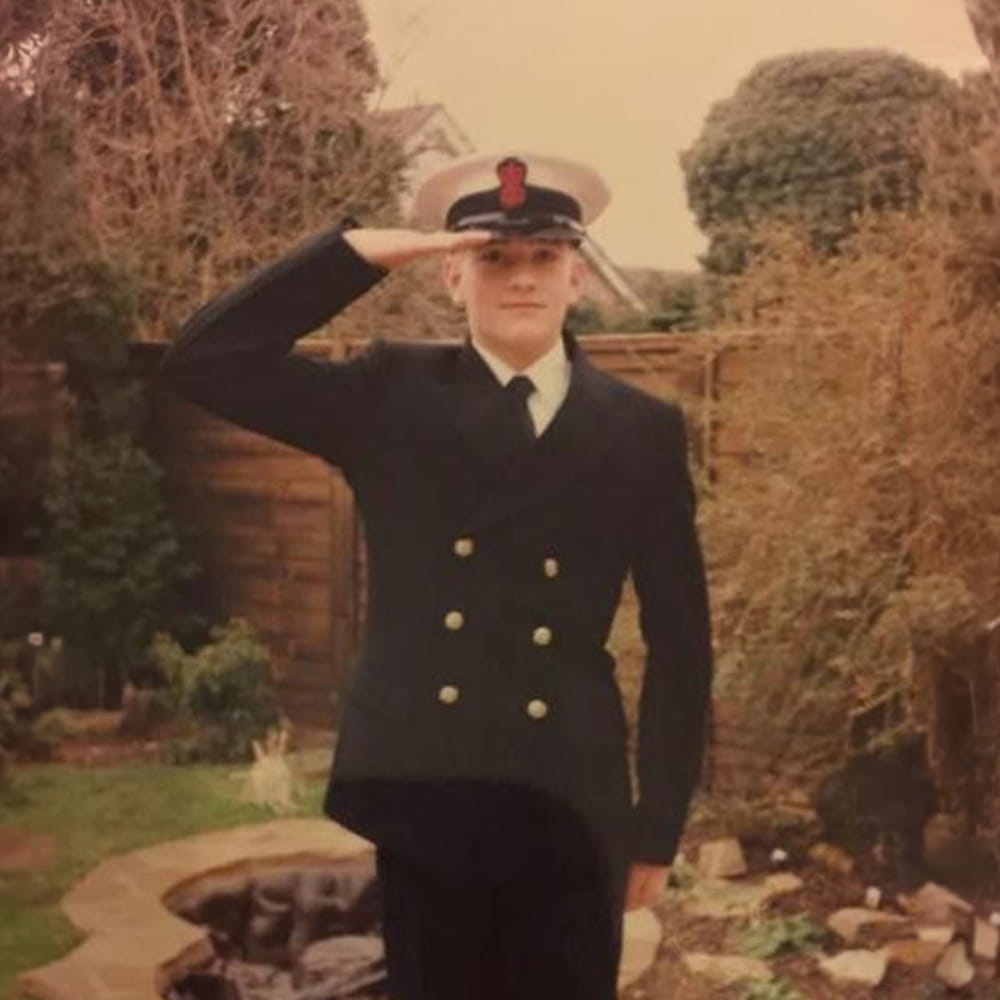


Matt Kent joined the Royal Navy in 1991 as a 17-year-old marine engineering apprentice. He left just under 29 years later, having risen from that starting point to officer and engineering leader. When he eventually moved into facilities management, the connection he found between the two worlds was not one he had anticipated.
“What you manage on a warship is very similar in principle to what you manage in the built environment,” he says. “It’s only the context that changes.”
From power generation and distribution to ventilation, water systems and firefighting, the engineering disciplines that keep a ship operational map closely onto those that keep a building running. It is a parallel that surprised him and has shaped his perspective on what the sector can offer people leaving the armed forces.
Early Determination, Lasting Foundations
Matt’s route into the Royal Navy required some early determination. He left school at 16, considered commercial diving, and ended up sitting opposite a careers advisor who suggested the Navy as an option. When he enquired about the artificer programme, he was told he did not quite have the qualifications.
Being told he did not qualify was all the motivation he needed. He went back to college, resat his exams, and returned a year later with the grades to qualify. After completing his apprenticeship at HMS Sultan in Portsmouth, he joined his first ship, deployed to the Falklands, and began working his way through a career that would eventually take in ten to fifteen different roles across almost three decades.
In his mid-twenties, as a senior non-commissioned officer, he was identified as a potential officer candidate. He read a mechanical engineering degree at Southampton University, sponsored by the Royal Navy, moved into the Officer Engineering Corps, and continued rotating through positions every two to two and a half years.
Not everyone is ready for formal academic study at 16. “Everyone matures and delivers at different times in their life and their career,” he says.