Resilience Week 2026

Resilience Week 2026: Five Pillars, One Principle

OCS Team

OCS Team

05 Jun, 2026

Resilience Week 2026: Five Pillars, One Principle

Small actions. Big impact. That is the theme running through every pillar of OCS Resilience Week 2026, and the principle that holds them together.

Resilience tends to get attention in moments of crisis: a breach, a service failure, a colleague who has been struggling in silence. The organisations that hold firm in those moments are not the ones that happen to respond well on the day. They are the ones who, long beforehand, built the habits, cultures and controls that did not buckle under pressure.

Five pillars. Five disciplines. One shared idea.

Risk: Ready Today. Resilient Tomorrow.

A business continuity plan that has never been tested is not a plan. It is a document. The difference is whether people across the organisation understand their role, have rehearsed their response, and treat preparation as part of the job rather than separate from it.

Martin Lewis, OCS Group Head of Risk & Internal Audit, is direct: “Once you are in the middle of a business interruption, it is too late to start thinking about what you should have done differently.” OCS has seen that truth play out across a decade of major events: the pandemic, cyberattacks, terror threats, climate-related disruptions, and fuel and food shortages driven by global conflict. OCS UK&I and OCS Singapore hold ISO 22301 certification, and continuity training is extending that readiness across the wider business. The small action here is everyday discipline: reviewing plans, completing training, staying alert. Complacency after a major event is itself a risk. The next disruption will arrive differently.
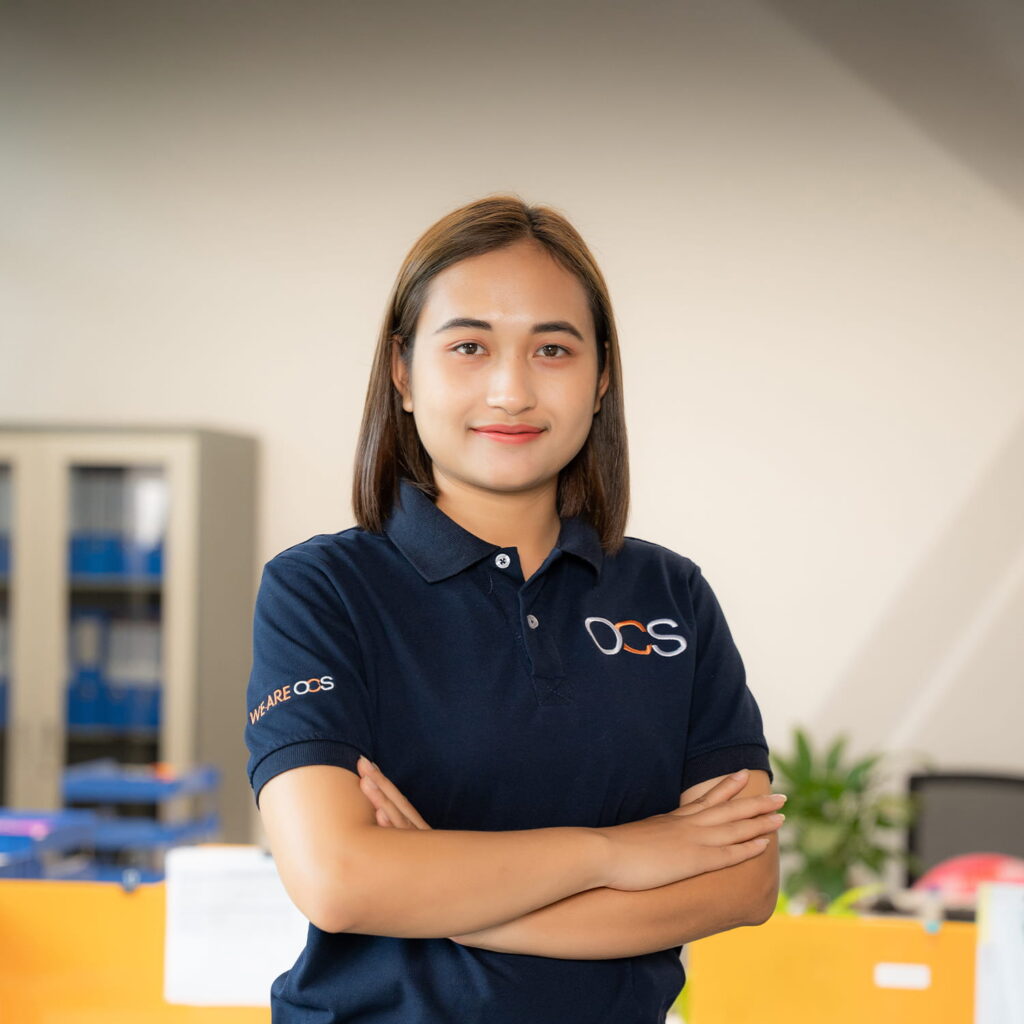

A woman with straight brown hair, wearing a navy blue collared OCS shirt, stands indoors with her arms crossed and smiles confidently at the camera. Office furniture and shelves are visible in the background.
A person wearing a white hard hat, safety goggles, and a dark uniform operates a touchscreen control panel on industrial machinery.

QHSE: Protecting People. Powering Resilience.

Resilient organisations are not built by policy documents. They are built by the choices people make every day to protect colleagues, raise a concern, follow a process, and improve what is not working.

OCS Group QHSE Officer Jonathan Gawthrop describes it plainly: “Resilience is built from the ground up through investment in training, clear processes, strong leadership and the tools colleagues need to work safely and effectively.” A systems-thinking approach underpins this. Operations, HR and executive leadership do not work in parallel but in connection, each reinforcing the other, with the three lines of defence aligned to ISO 31000 principles providing accountability and oversight across the whole. The risk of gradual drift is real: small shortcuts, unchallenged assumptions, low-likelihood events that no one has planned for. Each safe decision, each quality check, each moment someone speaks up, is a small action that guards against it.

A smiling person wearing an orange work uniform with reflective stripes and black gloves stands outdoors, holding pruning shears with folded arms. Greenery and blurred trees appear in the background.
A smiling worker wearing a high-visibility vest, harness, and a navy cap stands in an outdoor corridor with columns.

Cyber: Stay Alert. Stay Connected.

Cybersecurity is a leadership issue, a people issue, and a resilience issue. OCS Group Chief Information Security Officer Neil Weller argues that organisations treating it as a purely technical matter are already exposed.

The threat landscape has shifted fast. AI is enabling attackers to move faster, automate fraud, and convincingly impersonate trusted colleagues. One widely reported case saw an employee transfer $25 million after a video call built entirely from AI-generated versions of senior figures. The small actions that counter this are practical: stronger sign-in controls, removing access that is no longer needed, protecting backups from tampering, and clear guidance on approved AI tools. Most breaches do not come from sophisticated, novel attacks. They come from avoidable gaps in identity and access management, gaps that 90 per cent of investigated incidents shared, according to Palo Alto Networks Unit 42. Closing those gaps consistently is where cyber resilience lives.

Two people in dark uniforms monitor multiple security screens, with one person pointing at the surveillance footage. The room is dimly lit and filled with blue light from the monitors.
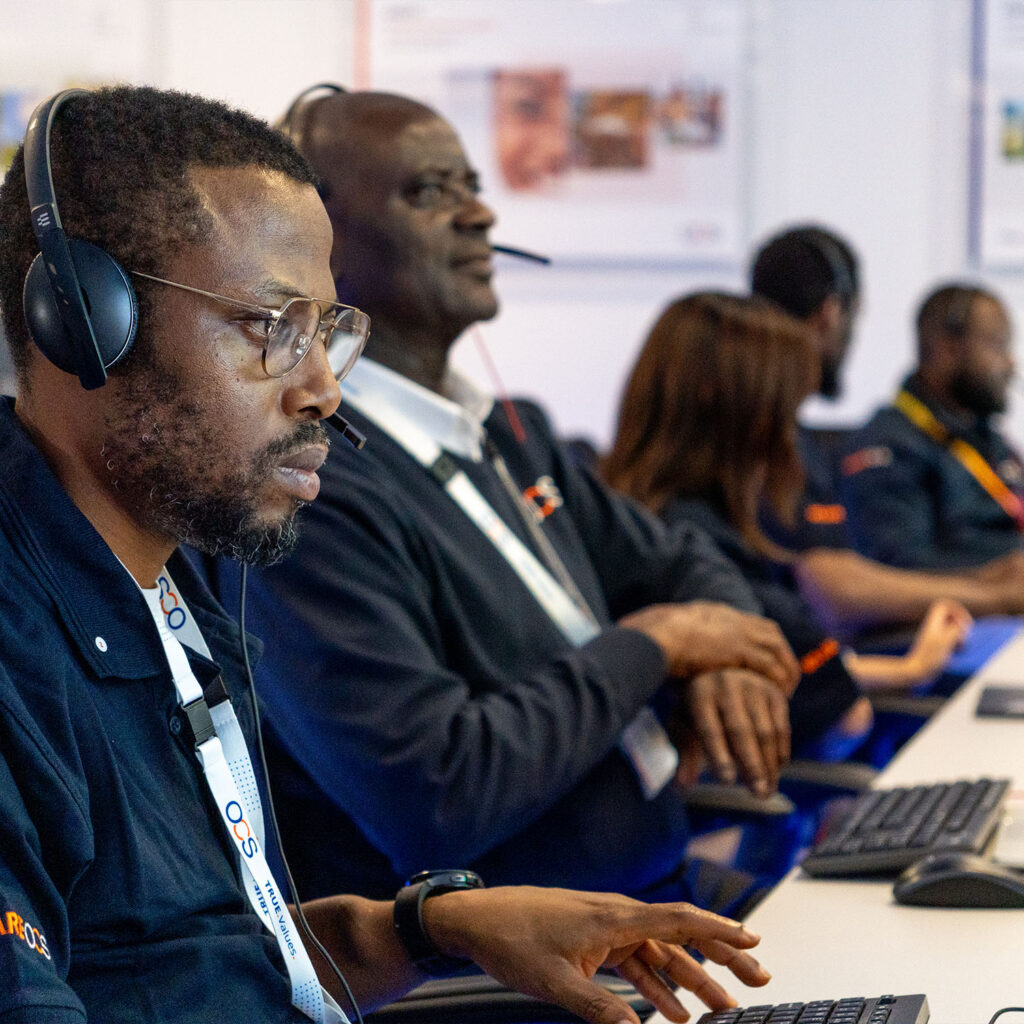
Several people wearing headsets and uniforms sit in a row at desks, focused on computer screens in a modern office or control room environment.

Wellbeing: Learning Together. Growing Stronger.

A generation of colleagues began their careers during the pandemic. Their first years of work were shaped by remote starts, hybrid handovers and far fewer of the informal moments that quietly build confidence. The over-the-shoulder learning, the unplanned corridor conversation, the sense that someone more experienced was watching and willing to help: much of that was lost.

Mentoring can recover it. OCS launched Mentoring Circles at its Women in Security event at Capital One UK’s Nottingham headquarters in March 2026, with senior female leaders running group sessions for women in security at every level. The group model was deliberate: there are not enough senior female mentors in the industry for one-to-one support, and Circles extend that capacity. In India, a 90-day Data Centre Facilities Management programme places new colleagues in a live simulation lab before moving them into operational environments with experienced practitioners alongside them. Knowing someone more experienced is invested in your progress changes how you handle pressure. That is what wellbeing, at its most practical, looks like.

A man with dark hair smiles and tilts his head back while standing outdoors in a sunlit area with green, leafy trees in the background. He wears a blue shirt and a black puffer vest.
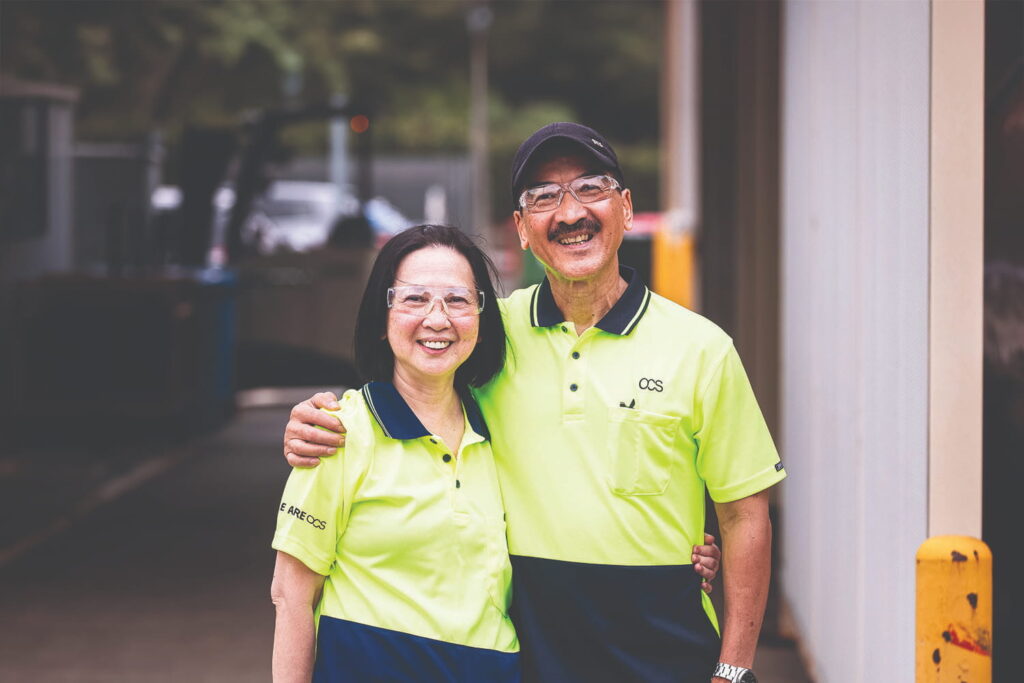
Two people in matching yellow and navy work shirts stand side by side, smiling, with one persons arm around the others shoulders. They are outdoors near a building, both wearing glasses and appearing cheerful.

ESG: Small Choices. Lasting Impact.

OCS employs around 140,000 colleagues worldwide. If each one made one positive environmental decision every day, the cumulative effect would be extraordinary. Peter Seeley, OCS Group Head of ESG, makes the case plainly: net zero will not be delivered by sustainability strategies on a page. It happens because every day people make small, consistent choices.

The barrier is rarely denial. It is doubt: the quiet sense that one person’s contribution is too small to register. Research suggests otherwise. A major international study of nearly 130,000 people across 125 countries found that 69 per cent were willing to act on climate and 86 per cent supported pro-climate behaviours, yet people consistently underestimated how much others shared that willingness. Most people do care. They are waiting for evidence that they are not alone in it. Reducing waste, switching off equipment not in use, choosing lower-carbon options where practical: none of these are revolutionary. Consistently, across 140,000 colleagues working in hospitals, airports, schools and communities every day, they become something significant.

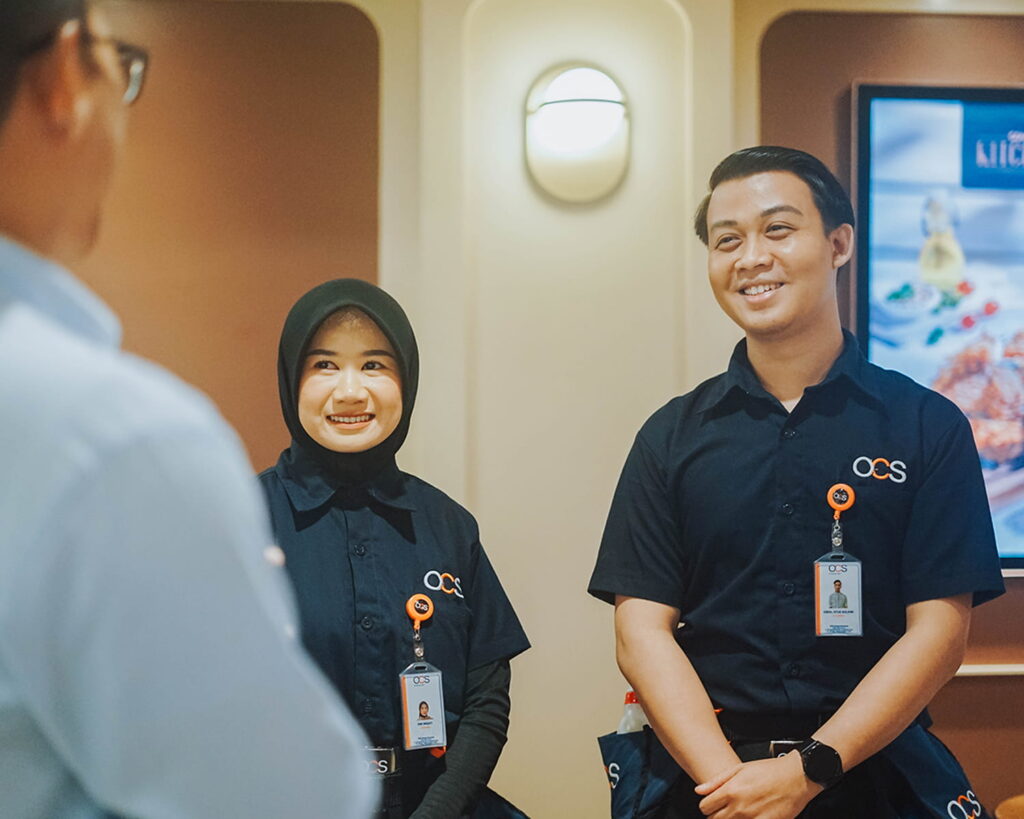
Two smiling OCS employees, one wearing a hijab, stand together indoors and face a person in a light blue shirt. They wear navy uniforms with name badges in a well-lit, modern setting.
A vibrant cityscape featuring lush green parks, a winding river with footbridges, and modern buildings under a bright blue sky with scattered clouds. The skyline includes tall structures in the distance.

The Principle Behind Every Pillar

Preparation over complacency. People over policy. Consistency over the occasional grand gesture.

Every pillar of Resilience Week 2026 points to the same truth: resilience is not something organisations find in a crisis. It is built before it, through thousands of small decisions made by people who understand the role they play. The impact of those decisions, compounded across a global workforce, is anything but small.

Building Resilience Together

Building Resilience Together

Visit Resilience Week 2026

Share this story