

Data Centres | Energy Services

What’s Next in Data Centres: Energy Efficiency and the Trends Shaping 2026

Steve Clifford - Director of Data Centres, OCS UK & Ireland

Steve Clifford - Director of Data Centres, OCS UK & Ireland

14 Aug, 2026

What’s Next in Data Centres: Energy Efficiency and the Trends Shaping 2026

Data centres are still dominating business headlines in 2026. The pressure to expand the sector shows no sign of slowing, and the real question is what’s achievable this year and how the industry needs to evolve to meet demand.

Four trends will define how the sector develops over the coming months: the continued popularity of retrofit, the transition to higher-efficiency systems, the growing importance of real-time data, and the pressing need to close the skills gap. Together, these trends are putting data centre energy efficiency firmly at the centre of future development.

Retrofit Remains a Popular Route for Expansion

Retrofit-first strategies keep gaining traction as operators recognise the benefits of upgrading existing facilities to advance sites and expand capacity. Rather than pursue new builds, retrofitting offers a strategic alternative for improving performance, supporting net zero goals, and managing infrastructure risk.

The advantages are clear. Retrofit can cost up to 40 per cent less than constructing a new facility, and project timelines can be cut by around 30 per cent by avoiding lengthy site development and utility setup. It also bypasses grid connection lead times by drawing on an already-established power supply, something 54 per cent of developers cite as a key barrier to new projects.

The sustainability case is just as strong. Reusing infrastructure significantly reduces embodied carbon emissions compared with a greenfield build from scratch. The industry faces growing scrutiny over its environmental impact and retrofit offers a pragmatic way to expand capacity without developing as large a carbon footprint.
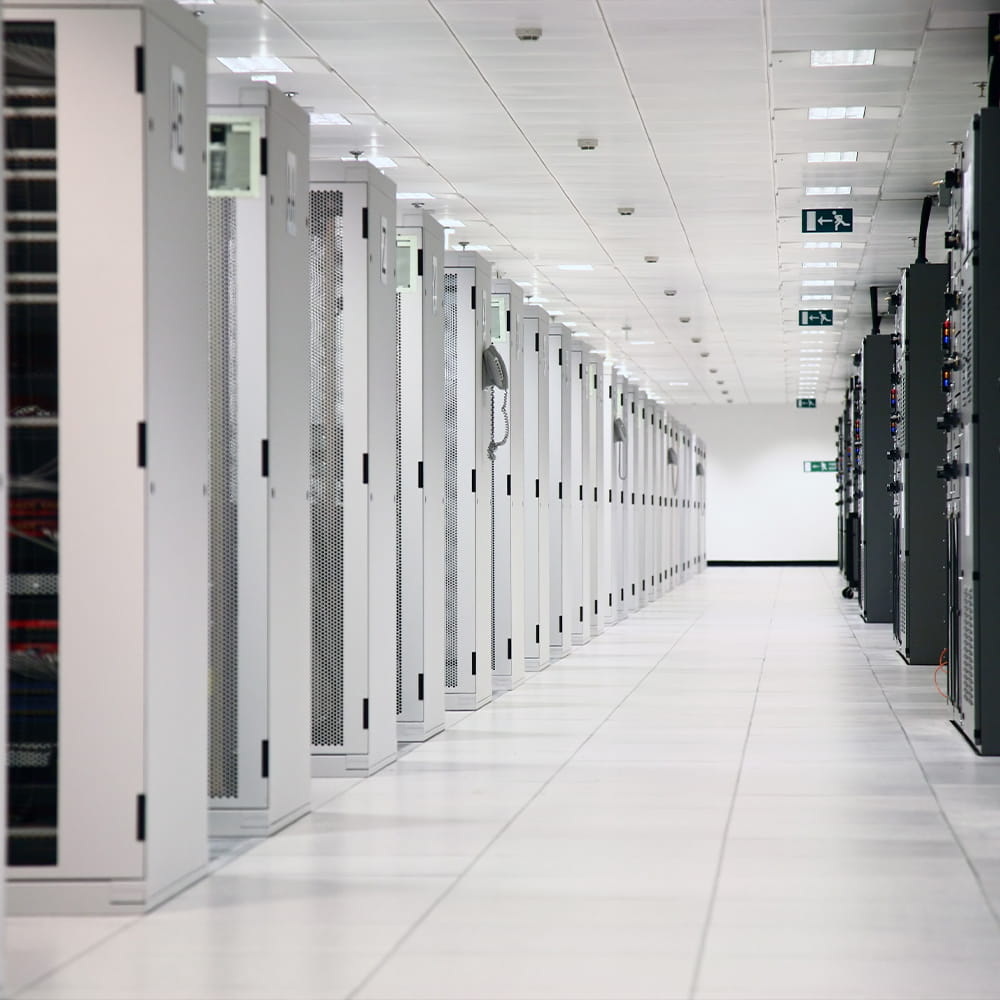
A long corridor inside a modern data centre, lined with tall, white server racks on both sides under bright ceiling lights.
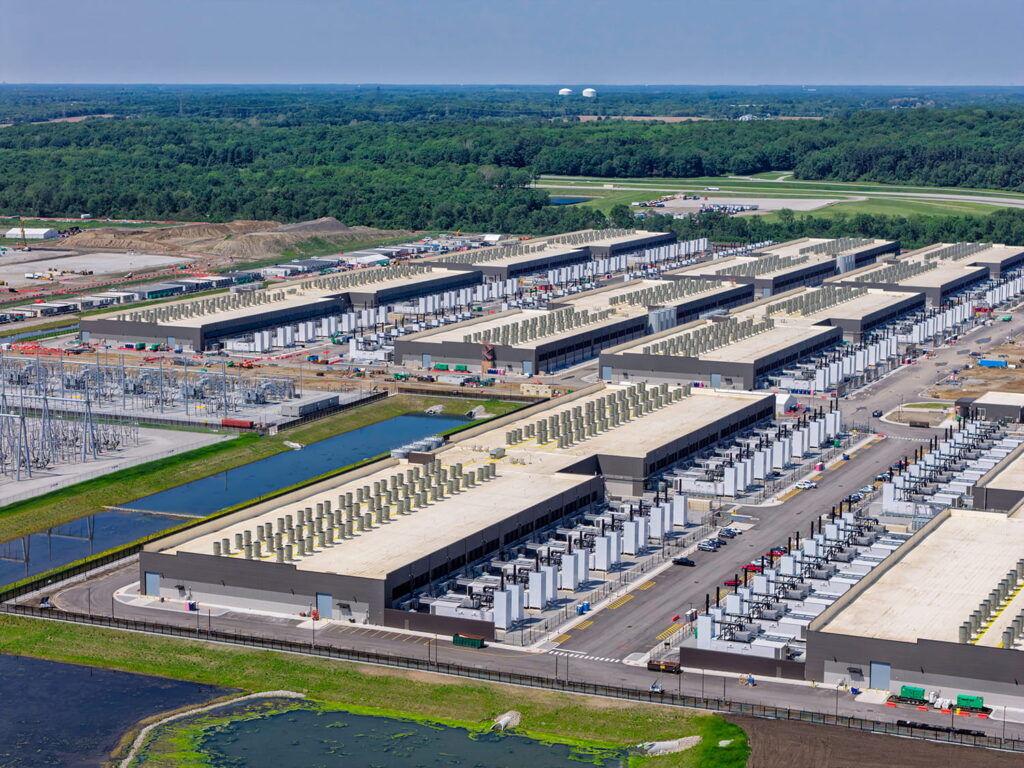
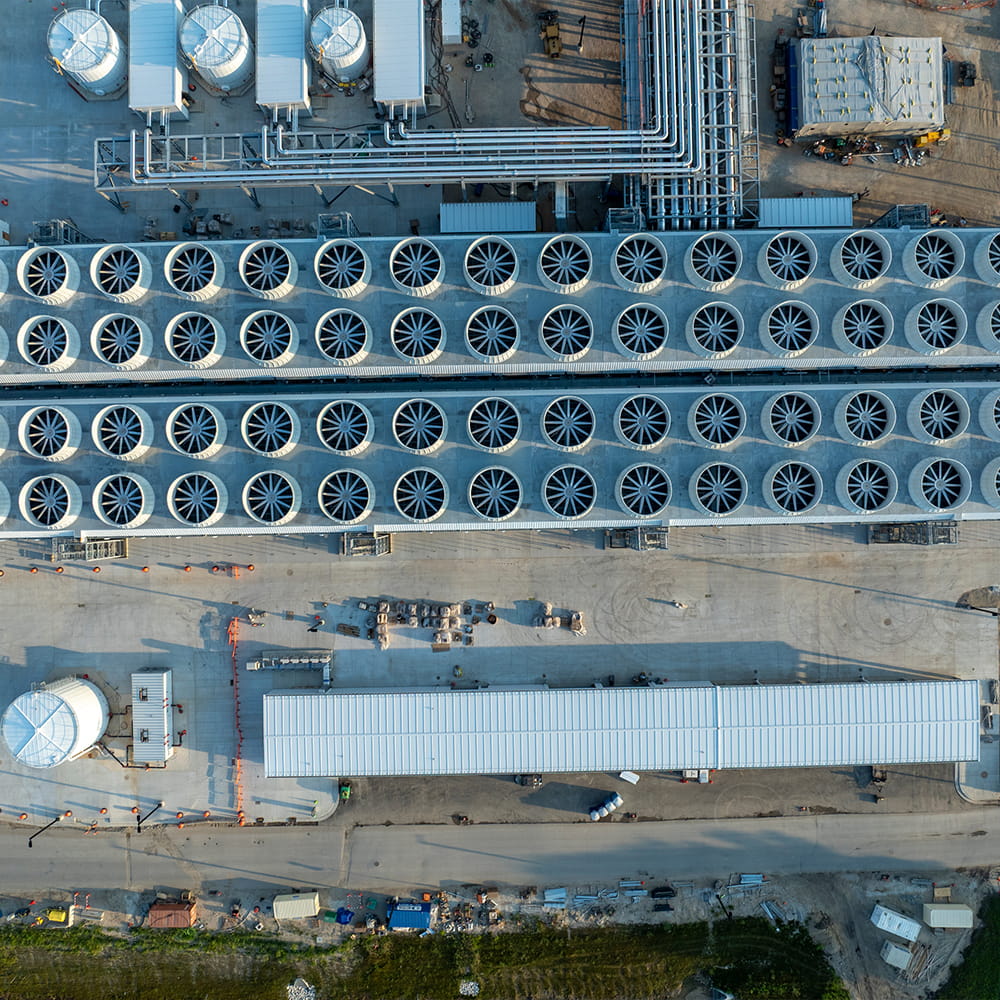
Aerial view of an industrial facility with rows of large fans, storage tanks, pipes, and buildings, possibly related to energy or data processing.

Data Centre Energy Efficiency Is Essential for Meeting New Demands

Demands for thermal management, improved airflow and power draw are all increasing, and meeting them requires higher-efficiency infrastructure. Design and engineering teams need to achieve higher conversion efficiencies and fit more cabinets within the same physical space.

Replacing ageing cooling systems with high-efficiency alternatives, improving airflow, and integrating energy controls can reduce energy consumption by up to 25 per cent. These interventions often bring secondary benefits: lower maintenance costs, improved resilience, and easier alignment with ISO 50001, ESOS, and Scope 1 and 2 emissions reporting.

On a recent project, we used profile modelling to identify an optimal cooling configuration based on hot aisle containment. We integrated a new 380V DC power system to achieve over 96 per cent conversion efficiency and increased cabinet density, delivering 136 cabinets against a brief of 130, all while keeping the data centre fully operational.

Improvements like these are driven by the need to lower costs and increase data centre energy efficiency. Facilities that succeed in 2026 will deliver more computational power per square metre without a proportional rise in energy consumption.

Strong Underlying Data Remains Critical

The shift from reactive maintenance to data-driven asset management continues, and it requires a new mindset among estate teams and engineers. Rather than a fix-on-failure approach, smart systems such as Internet of Things (IoT) sensors and predictive tools give real-time visibility of energy use and asset performance. Digital twinning and 3D modelling map out every millimetre of a site to coordinate designs and pre-empt spatial constraints.

These tools and energy monitoring platforms support data-driven decisions and continuous optimisation of facilities. In 2026, strategic planning needs to include a full lifecycle and risk assessment of the site to understand resilience strategies and audit critical systems. The facilities that perform well will be those with robust data infrastructure that supports proactive management rather than solely reactive responses.

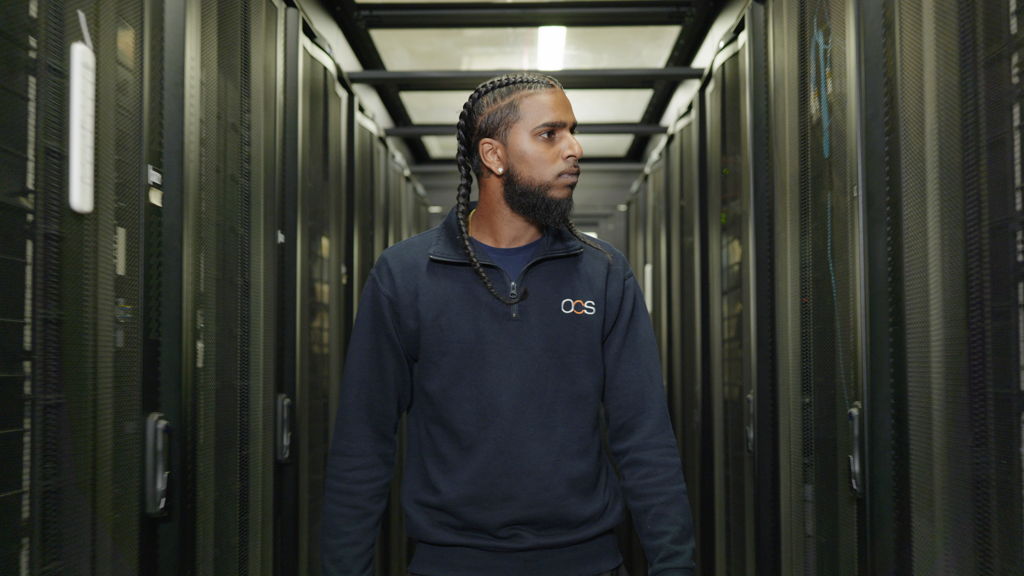
A man with plaited hair and a beard walks through a server room lined with tall black server racks, wearing a dark sweatshirt with an OCS logo on it.
A modern industrial facility with blue and gray buildings and many smokestacks stands behind a body of water, with a wind turbine visible on the left under a clear blue sky.

Closing the Skills Gap Requires Urgent Attention

The industry faces a significant shortage of technical personnel as global demand for capacity continues to expand at pace. According to the Uptime Institute’s 2025 survey, hiring new staff is one of the sector’s top three challenges, and retaining qualified staff is the greatest challenge of all.

As the market grows and data centre operations expand into more countries, skilled workers are in short supply. Salaries are rising steeply as people chase opportunities, creating retention challenges for organisations that fail to invest in their teams.

High-demand environments carry high expectations, so keeping engineering teams engaged and motivated is key to long-term performance. A sustained approach to engagement, built on continuous training and development, delivers greater continuity and deeper site expertise. That intimate understanding strengthens retention and customer service, as teams use their knowledge to keep operations seamless.

Apprenticeship schemes and investment in consistent, knowledgeable teams will be crucial to developing those who oversee data centres, from initial development through to long-term system reliability.

Looking Ahead

These four trends are part of a wider shift across the industry. As development accelerates through 2026, reusing existing sites and planning carefully for the long term is becoming best practice, rather than building for the short term.

The organisations that succeed will be those that embrace retrofit opportunities, invest in data centre energy efficiency, harness real time data, and build resilient, skilled teams capable of delivering the reliability these critical facilities demand.

Powering the Future of Data Centres

Powering the Future of Data Centres

Explore Our Data Centre Services

Share this story