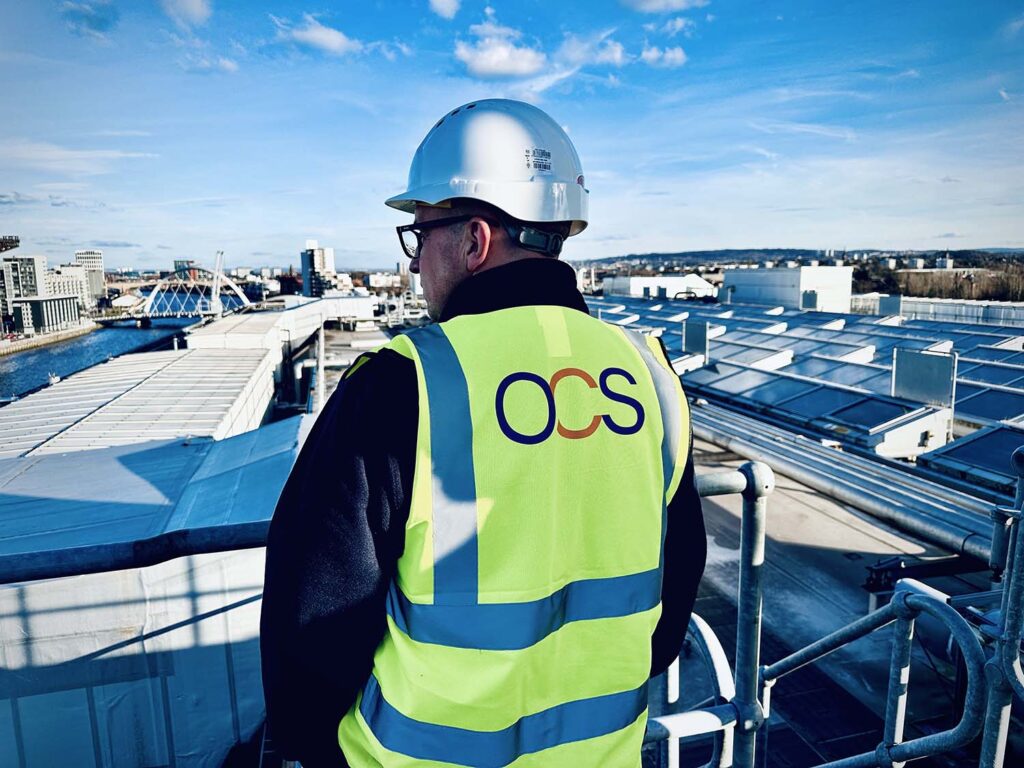
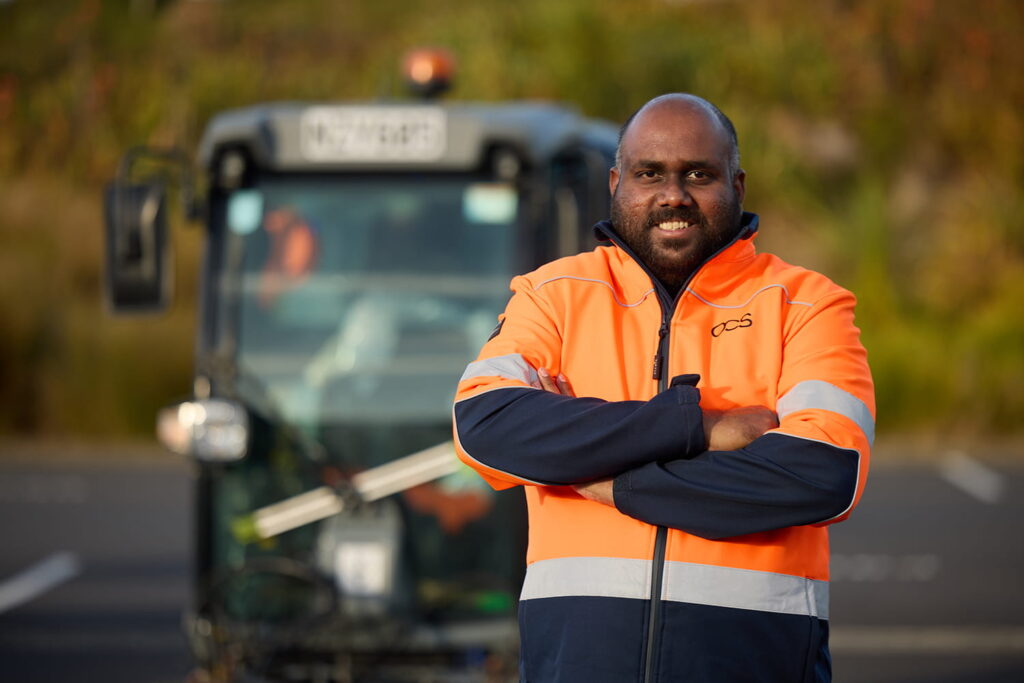
As operations grow more complex, airports and the organisations supporting them work much more closely together, sharing responsibility for overall performance rather than handing over a list of tasks. Sunil sees the Mumbai contract in exactly those terms, describing the team of 800 trained professionals as “more than a service provider” and instead “a trusted engineering partner ensuring smooth operations” in a setting where the stakes are high, and the clock never stops. Across the wider region, specialists in mobilisation, ESG, QSHE and innovation strengthen that operational experience, so good practice moves between countries while delivery stays rooted in the needs of each airport. Global aviation services and experience become local expertise.
Two Very Different Tests in Australia and New Zealand
The same focus on outcomes appears in operations that look nothing alike. In Australia, OCS has supported a leading airline catering provider for more than 15 years, delivering cleaning and biosecurity services certified to HACCP standards across seven ports in six states. Teams work 24 hours a day, 365 days a year, moving between regulated food production areas and offices, and adding specialist deep cleaning, waste management and biosecurity services.
Airline, food safety, hygiene and biosecurity rules leave no room for variation, so consistency is the whole job. The operation has maintained a strong record across inspections, whether announced or unannounced. Passengers will never see any of it, yet it sits directly behind the safety and reliability of their journey.
Across the Tasman, OCS New Zealand’s WasteLine division has worked with Auckland Airport since 2012. The country’s busiest international hub has changed what it asks for over that time, moving from cost and efficiency improvements towards greater waste recovery and stronger operational performance. A dedicated waste facility approved by MPI opened in 2023, making it possible to recover far more cabin, kitchen and retailer waste.
WasteLine now manages the movement and consolidation of waste across airport operations. This includes handling and transporting more than three tonnes of material every day inside strict biosecurity requirements. The partnership is lifting recovery rates and supporting the longer-term sustainability goals Auckland Airport has set for itself.
Different countries, different services, different pressures; the same global aviation services standard. The principle holds steady in all of them: understand what matters locally, then bring the people, systems and knowledge needed to deliver it.