
Why Net Zero Will Only Happen If We All Play Our Part
Businesses across the world have made bold commitments to achieve Net Zero. Targets are set, roadmaps created, strategies launched and dashboards built. But there are two truths a truth behind it all: many have stalled in their ambitions, and no business can achieve its ambitions unless its people get actively involved.
That may sound obvious. But I’ve started to wonder whether sustainability has reached the same point that building safety first cultures did years ago. We all know it matters. We all agree it’s important. We all believe it’s everyone’s responsibility. And perhaps because of that, many people assume it simply happens and fail to recognise their own responsibilities and important role they have to play.
Health and safety only works, because thousands of people take small actions every day. Sustainability is no different.
Has Sustainability Become Yesterday’s Trend?
A few years ago, sustainability was the topic everyone wanted to talk about. Net Zero commitments, climate pledges, reusable cups, electric vehicles, carbon footprints. There was energy and real momentum. But perhaps some of that enthusiasm has faded.
Maybe people have become overwhelmed at the overall challenge, believing they can’t make enough difference as an individual to make an impact. That could be one of the biggest barriers we face.
When you consider climate change as an individual, the challenge feels enormous. You switch off your lights. You recycle. You reduce waste. You make more conscious choices. Then you see wildfires, floods, record temperatures, and headlines telling us that global emissions continue to rise.
You naturally ask yourself: will my small actions really make any difference?
The Barrier isn’t Denial. It’s Doubt.
Research suggests that one of the biggest barriers to action is not climate denial. It’s ‘impact doubt’. Many people care deeply about climate change but hesitate because they believe their own actions are simply too small to matter.
I can understand that.
No single action changes everything, all at once. But that was never the point. Sustainability was never meant to be about one person changing the world. It has always been about scale.
One person making a small change can feel insignificant. A thousand people making the same small change start to matter. A hundred thousand people making that change becomes a powerful movement. And when you consider organisations with large workforces and wide customer and partner networks, the opportunity becomes extraordinary.
The Case for Collective Action
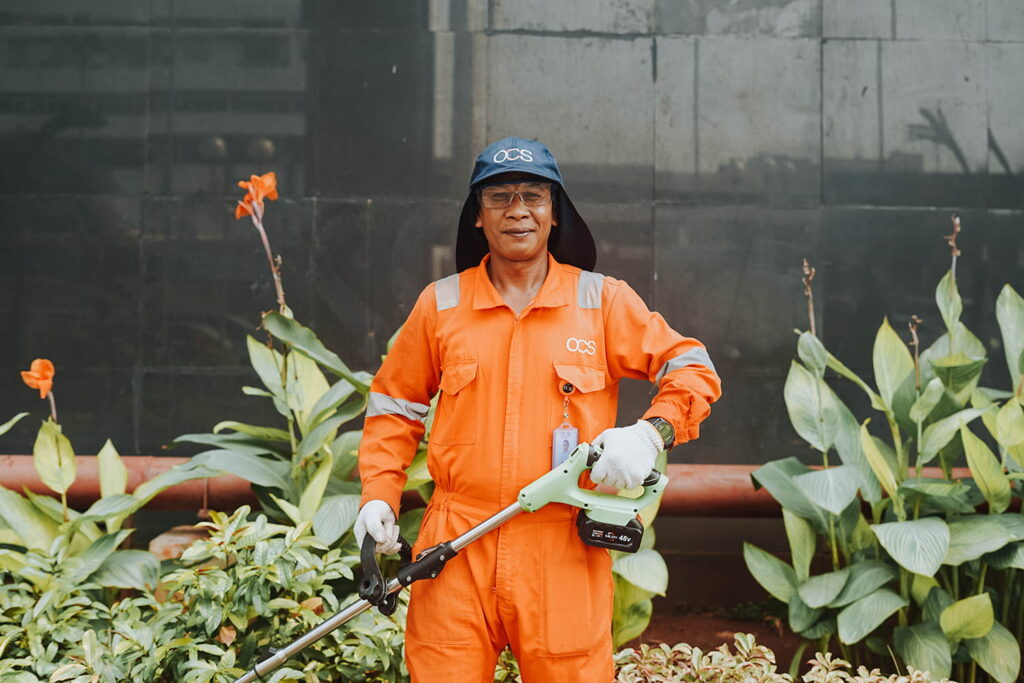
OCS employs more than 140,000 colleagues worldwide, and we’re continuing to grow. Every day, our people work in hospitals, airports, manufacturing sites, office workspaces, schools and in communities. If every colleague took one positive action at work or at home, the cumulative impact would be significant. But it doesn’t stop there.
Think about the organisations we support, their people, and the communities we collectively influence. The impact keeps compounding. Real change doesn’t happen through one grand gesture. It happens through millions of small ones.
A major independent study, drawing on responses from almost 130,000 people across 125 countries, found that 69% were willing to contribute personally to climate action. More striking still, 86% supported pro climate social behaviours. Yet people consistently underestimated how willing others were to act.
I find that fascinating.
Perhaps we all think nobody else really cares. Perhaps we think we’re the only one trying. Perhaps we’re all waiting for someone else to move first. The irony is that most people do care, so this may not be a motivational problem at all. It may be a visibility problem.