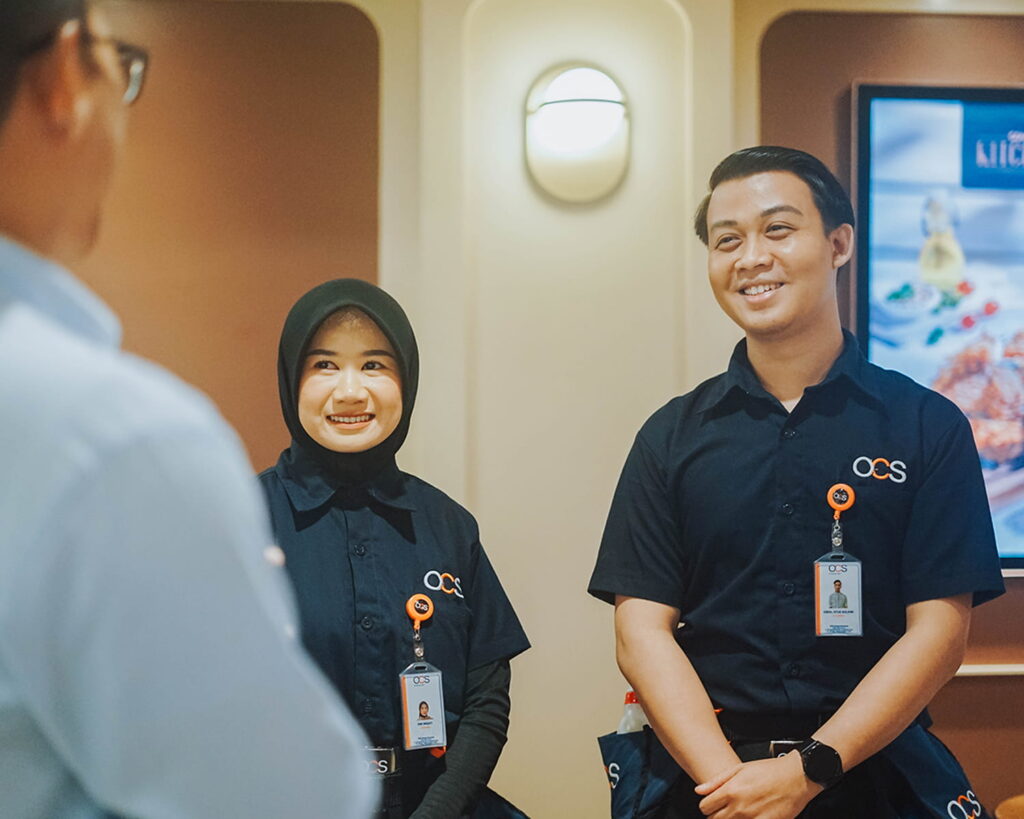

Standfirst: Ready Today. Resilient Tomorrow. As part of this year’s Resilience Week, OCS is highlighting why business continuity is not just an operational necessity, but a strategic capability built through preparation, accountability and collaboration, so organisations can respond with confidence when disruption occurs.
As organisations face an increasingly complex risk environment, business continuity has become a defining measure of resilience. At OCS, it is an ongoing priority, and this year’s Resilience Week Risk pillar shines a light on the everyday actions that keep critical services running.
Business Continuity Starts with Everyday Action
As Martin Lewis, OCS Group Head of Risk & Internal Audit explains, business continuity is built through preparation, awareness and action long before disruption occurs.
Across OCS, colleagues play a vital role by understanding procedures, staying alert to emerging risks and knowing what to do if continuity plans are activated. Taken together, these actions help protect people, support customer operations and maintain service delivery under pressure.
That is why business continuity cannot sit with one function alone. From frontline colleagues to operational and functional leaders, resilience depends on people understanding the role they play and acting on it with confidence. When that mindset is embedded across a business, it is better placed to respond quickly, recover effectively and continue delivering for customers.
That is especially important given the breadth of customers OCS supports across commercial and private sectors, often in critical environments where continuity matters deeply. When OCS maintains its services, it helps customers maintain theirs too, protecting essential operations, supporting frontline delivery and reducing the wider impact of disruption.
Customers rightly expect continuity arrangements that are credible, tested and capable of restoring services within agreed timeframes.


Turning Intent into Capability
As defined by BSI, the UK’s national standards body: “Business continuity is an organisation’s capability to continue delivering products and services within acceptable timeframes, at predefined capacity, during a disruption.”
In OCS, Business Continuity and IT Disaster Recovery Plans are being reviewed to ensure arrangements remain current, robust and aligned to operational needs. In the UK&I business, continuity training is being rolled out to increase awareness among colleagues and build confidence in how to respond when disruption affects services.
This matters because resilience is increasingly judged not only by how organisations respond to disruption, but by how well they prepare for it.
OCS UK&I and Singapore are ISO 22301 certified, reflecting alignment with the international standard for Business Continuity Management Systems and reinforcing a structured approach to preparing for, responding to and recovering from disruption.
Together, We Keep Services Running
Strong business continuity is built on collaboration. Disruption rarely respects organisational boundaries, which is why effective responses depend on clear communication, shared accountability and trusted relationships across colleagues, customers and partners. From first identification and assessment through escalation, response and recovery, joined-up working is what enables organisations to remain reliable, responsive and resilient.
Leadership Perspective
“Business continuity is not just about how we respond when disruption happens. It is about the culture, discipline and shared responsibility that help us prepare well and keep delivering for our customers. Every colleague has a part to play, and by working together with our customers and partners, we strengthen resilience across the whole business. Once you are in the middle of a business interruption, it is too late to start thinking about what you should have done differently. We have seen how quickly organisations have had to respond to major events, from the pandemic and cyber-attacks to terror threats, climate-related disruption, and fuel and food shortages driven by global conflicts. It is just as important that, once an event has passed, complacency does not creep in, and we do not fall into the mindset that it can never happen again. It might not happen in exactly the same way, but another major risk or disruption undoubtedly will. That is why being ready today matters.”
OCS Group – Head of Risk & Internal Audit
Resilience is not defined by the absence of disruption, but by the ability to anticipate it, prepare for it and act decisively when it comes. That is why embedding business continuity into day-to-day decision-making matters, not only within OCS, but across all organisations, teams and supply chains that depend on continuity every day.