Regenerative Facilities Management for Next-Generation Data Centres

OCS Team

OCS Team

11 Sep, 2026

Regenerative Facilities Management for Next-Generation Data Centres

Hyperscale data centres now sit at the centre of enterprise growth, cloud adoption, and digital transformation. In these environments, availability, environmental control, safety, access, and maintenance discipline connect directly to customer uptime and business continuity. Effective data centre facilities management is what makes that possible. A newly operational campus rarely needs a conventional maintenance provider. It needs a partner able to govern critical facility activities, coordinate specialist vendors, manage building services, and prove performance through structured reporting and service-level controls.

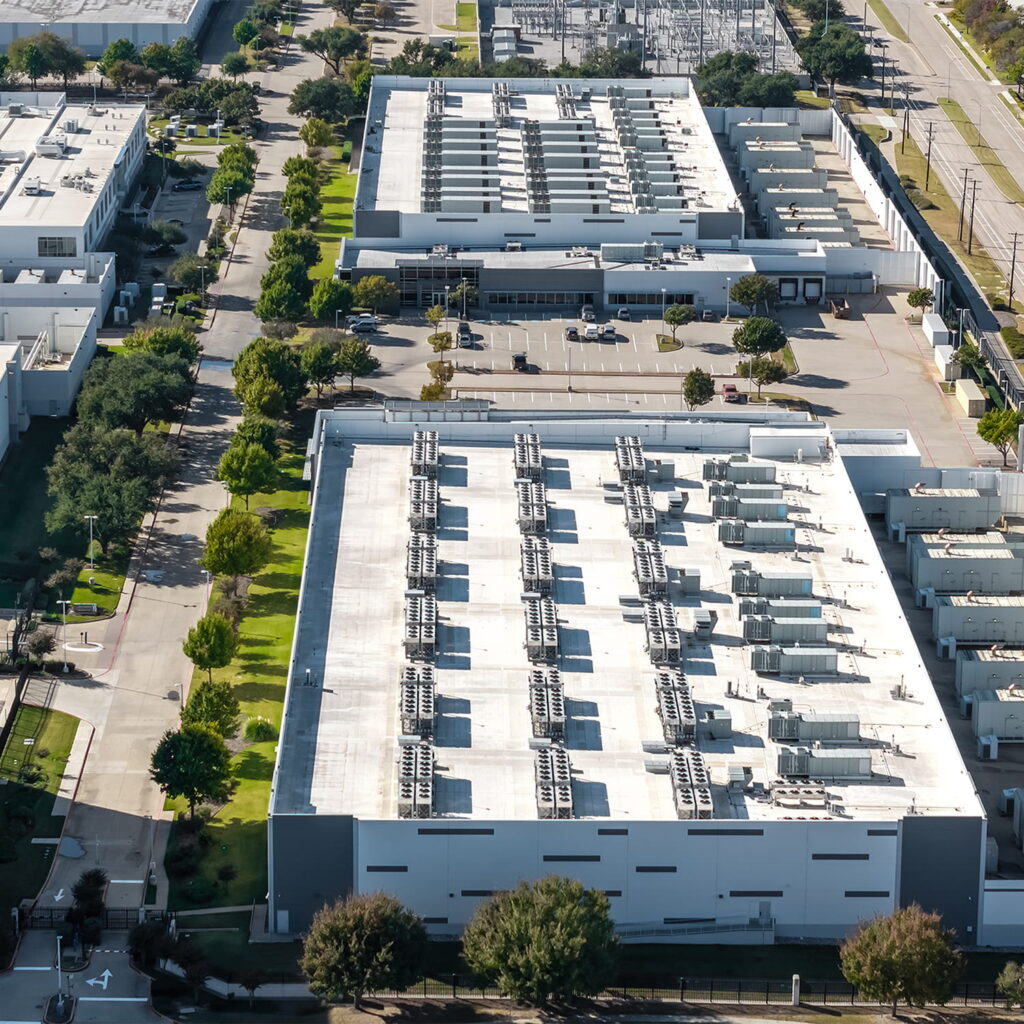
This is the model OCS built with a leading hyperscale data centre operator in Indonesia, combining Facilities Management Agent (FMA) governance with Building Management (BM) services across a campus of approximately 65,000 square metres designed to support up to 75 MW of IT capacity. The partnership was built around a shared objective. Together, OCS and the customer wanted a resilient, transparent, and continuously improving operating environment. That environment protects critical operations. It also strengthens service accountability, asset stewardship, workforce capability, and resource efficiency.

Key takeaways

  • OCS Indonesia combines FMA governance with Building Management for a 65,000 sqm, 75 MW hyperscale campus.
  • Data centre facilities management here means governing vendors and critical systems, not just executing tasks.
  • Reported FMA SLA performance reached 99.93% against a 98% target, with 100% monitored system availability.
  • Building Management lines recorded security at 99.994% and housekeeping, landscaping, and building technical at 100%.
  • A regenerative approach turns operational data into continuous improvement across resilience, capability, and efficiency.

The Operational Challenge for Data Centre Facilities Management

For a hyperscale facility, operational continuity depends on the complete facilities ecosystem. It does not depend on equipment reliability alone. As a newly operational site, the customer needed a partner able to govern critical facility activities. That partner also had to coordinate specialist maintenance vendors, manage building services, and provide clear evidence of performance.

The operating model also needed to support rapid growth and stringent uptime expectations. At the same time, it had to maintain disciplined procedures, safe working practices, and consistent service standards across critical and non-critical areas.

The requirement centred on:

  • Mobilising a fully operational facilities management model within an aggressive implementation timeline
  • Establishing FMA governance for day-to-day critical facility monitoring and operational coordination
  • Governing preventive maintenance performed by specialist vendors through controlled planning, access, documentation, supervision, and completion tracking
  • Integrating cleaning, gardening, facade cleaning, building maintenance technicians, and security through one BM governance structure
  • Protecting availability and environmental conditions in mission-critical areas
  • Standardising MOP, SOP, EOP, SLA/SLG, reporting, escalation, and compliance controls
  • Providing transparent visibility of performance, exceptions, operational risk, and resource efficiency

Mission-critical environments demand disciplined governance across every service line.

The Regenerative FM Approach

OCS established an operating model that connects people, process, specialist vendors, performance data, and governance. It is built around the outcomes that matter most to the customer: uptime and resilience, safety, transparency, and continuous improvement. The aim goes beyond preserving the facility. Operational information and service performance are used to make the operating environment more controlled and more capable over time.

1. Rapid and structured mobilisation. The operating model was mobilised within a one-month implementation period. This aligned workforce, procedures, reporting, governance routines, and operational responsibilities while maintaining continuity of critical support.

2. FMA as the critical facilities governance layer. The FMA team provides day-to-day oversight of critical systems. It monitors operational parameters, identifies abnormalities, manages operating documentation, coordinates incidents, and governs preventive maintenance delivered by specialist vendors. Routine monitoring covers critical cooling, electrical, power backup, control, and fire-suppression systems. This includes CRAC, FCU/VRV, cooling towers, pumps, chillers, transformers, UPS, switchgear, generators, and DCMS/BMS infrastructure.

3. Controlled maintenance and vendor governance. OCS governs the maintenance process rather than acting as the sole specialist executor. The team validates schedules, coordinates access, and confirms required MOP/SOP/EOP documentation. It also tracks execution, reviews completion evidence, records constraints, and escalates deviations to the customer and responsible vendor.

4. Integrated building management. BM is managed as a coordinated support environment around the critical facility, covering cleaning, gardening, facade cleaning, building maintenance technicians, and security. Common controls for competence, access, service execution, patrol, incident response, and reporting reduce siloed working.

5. Operational procedures and control. Formal MOP, SOP, and EOP governance strengthens control of planned, corrective, and emergency activities, covering cooling, UPS, generator, transformer, and emergency scenarios.

6. Performance governance through SLA and SLG. FMA performance is measured through workforce coverage, document delivery, availability and uptime, environmental compliance, preventive maintenance, resolution and restore time, and resource efficiency. BM uses weighted SLG categories covering workforce, access, service handling, patrol, response, and reporting.

7. Data-led continuous improvement. Daily and monthly reporting converts field activity into management information. The operating loop follows a clear sequence: establish a baseline, monitor actual performance, identify deviations, coordinate corrective action, verify completion, analyse the cause, and feed lessons into the next plan.

Evidence from the Reporting Framework: Data Centre Facilities Management in Action

The operational reports show how the governance model translates into measurable performance. The figures below represent specific reporting periods. They are evidence of the management framework, not guarantees of future results.

FMA performance

  • Overall FMA SLA score of 99.93% against a 98% target in the July reporting period
  • 99% workforce-hour achievement, with 3,432 actual hours against 3,456 planned hours while maintaining shift coverage
  • 100% monitored system availability, with no power breakdown or downtime recorded for the Data Hall scope
  • Temperature and humidity within the defined SLA limits across the monitored Data Hall areas
  • Preventive maintenance completion of 97.57%, with remaining gaps transparently attributed to project and access restrictions
  • 100% compliance with the reported restore-time target, while PUE and WUE were monitored at 1.85 and 3.69 L/kWh respectively

Building Management performance

In the latest SLA/SLG sample, the core BM lines recorded security at 99.994%, housekeeping and landscaping at 100%, and building technical at 100%. The reporting also makes exceptions visible. Periodic cleaning delays and outside-schedule activities were linked to project-area and access dependencies, followed by root-cause explanation and rescheduling. Building technical moved from 90% in June to 100% in August. This shows how gaps can be identified, managed, and improved through the operating cycle.

“Regenerative Facilities Management goes further, using operational evidence to improve the resilience, capability, efficiency, and transparency of the operating ecosystem over time.”

What This Delivers for the Customer

The integrated FMA and BM model creates value by protecting critical operations, improving service control, and generating information that supports better management decisions.

Operational resilience

  • A dedicated FMA governance layer maintains continuous oversight of critical facility conditions and coordinates specialist intervention when required
  • Daily monitoring supports earlier identification of abnormalities, while formal MOP/SOP/EOP controls strengthen planned and emergency work discipline
  • Incident and restore-time measurement reinforces response ownership and escalation accountability

Maintenance and asset governance

  • Preventive maintenance is managed through a controlled plan-versus-actual process rather than treated as isolated vendor activity
  • Access restrictions, project dependencies, findings, and corrective tickets are made visible and assigned clear ownership
  • Trend monitoring of critical parameters supports more informed maintenance and asset decisions

Transparency and accountability

  • SLA and SLG frameworks translate operational activity into measurable service performance
  • Monthly reporting provides an audit trail for manpower, maintenance, incidents, environmental conditions, service delivery, and exceptions
  • Root-cause analysis and action tracking support structured governance between OCS, the customer, and specialist vendors

Integrated building environment

  • Cleaning, gardening, facade cleaning, building maintenance technicians, and security operate under common governance rather than separate service silos
  • BM supports the critical environment by controlling cleanliness, access, minor building defects, external-area condition, and response readiness

Resource and sustainability visibility

  • PUE and WUE monitoring links facility operations with resource-performance visibility
  • Operational analysis makes the impact of maintenance, testing, project activity, and system behaviour more visible
  • Maintenance governance supports longer-term asset stewardship through better visibility of condition, completion, constraints, and recurring issues

The Regenerative Difference

Traditional facilities management focuses on preserving assets and completing tasks. Regenerative Facilities Management goes further. It uses operational evidence to improve the resilience, capability, efficiency, and transparency of the operating ecosystem over time. The model connects FMA governance, specialist maintenance vendors, Building Management, workforce capability, service-level measurement, and operational data into one continuous improvement system:

  • Baseline. Define operating conditions, maintenance schedules, SLA/SLG targets, responsibilities, and procedures
  • Observe. Monitor assets, environmental conditions, service delivery, incidents, constraints, and resource performance
  • Identify. Make deviations and risks visible through findings, tickets, SLA gaps, maintenance exceptions, and trends
  • Intervene. Coordinate the correct OCS team, customer stakeholder, or specialist vendor to resolve the issue safely and in a controlled manner
  • Verify and improve. Confirm completion, analyse the cause, strengthen controls or capability, and establish a stronger baseline for the next cycle

For operators of business-critical digital infrastructure, this shifts facilities management from a reactive support function. It becomes an operating system that protects uptime, increases management confidence, and continuously strengthens the environment their operations depend on. That is the standard hyperscale environments increasingly ask for, and the model OCS is built to deliver.

OCS India: delivering critical facility management solutions

OCS India: delivering critical facility management solutions

Read Their Story

Share this story