Australia | Our People

From London to Sydney: Every Journey Means Something to Someone

OCS Team

OCS Team

19 Aug, 2026

From London to Sydney: Every Journey Means Something to Someone

One standard connecting people across five countries
Every journey begins with a person and a reason to travel: a family reunion, a first holiday, a meeting that matters. Behind each one, often unseen, is the work that gets them through the airport safely and calmly.

OCS does that work across more than 60 airports and airlines in Australia, New Zealand, the UK, Ireland and India, with over 4,000 aviation professionals worldwide. The value of that scale isn’t simply being in more places. It’s about taking experience, ideas, and expertise from one airport and applying them intelligently in another.

One standard, many countries
Much of the work that keeps aviation moving happens before a traveller reaches the gate. Across OCS, this includes passenger support, terminal and specialist cleaning, cabin appearance, laundry, security screening, hold baggage screening, and the operational services that keep airports running smoothly.

“What surprises people is the span of what we do. The assumption is that we just clean, and it couldn’t be further from the truth. We run several very diverse services: assisting passengers with reduced mobility, terminal cleaning, cabin appearance for Virgin Atlantic, and a major laundry operation at Heathrow that supplies leading airlines.”

avatar
Richard Marshall

Sector Managing Director for Transport, OCS UK

Across Australia, New Zealand and India, that breadth extends further into the systems and infrastructure that keep airports moving. OCS teams support passenger boarding bridges and baggage handling systems, maintain airfield lighting and airport systems, and deliver mechanical and electrical services across complex aviation estates. Alongside them are colleagues providing aircraft cleaning, ground handling support, ramp services, queue management and other frontline services.

The mix varies by market, and that’s part of the strength of a global aviation business. Experience, systems and expertise can move between countries, while delivery remains shaped by the needs of each airport and the people who use it.

Across Australia and New Zealand
In Australia, OCS has supported a leading airline catering provider for more than 15 years, delivering HACCP-certified cleaning and biosecurity services across seven ports in six states.
Operating 24 hours a day, 365 days a year, teams work across regulated food production areas and offices, alongside specialist deep cleaning, waste management and biosecurity services.

In an environment governed by stringent airline, food safety, hygiene and biosecurity requirements, consistency is critical. The operation has maintained a strong track record across announced and unannounced inspections.

It’s an example of aviation work that passengers are unlikely ever to see, but which contributes to the safe and reliable operation behind their journey.

Across the Tasman, OCS New Zealand’s WasteLine division has worked with Auckland International Airport since 2012, supporting the country’s busiest international hub as its approach to waste has evolved from cost and efficiency improvements to greater waste recovery and operational excellence.
In 2023, Auckland International Airport opened a dedicated Ministry for Primary Industries-approved waste facility, enabling greater recovery of cabin, kitchen and retailer waste.

Today, WasteLine manages waste movement and consolidation across airport operations, processing and transporting more than three tonnes of material each day while working within strict biosecurity requirements. The partnership is helping Auckland Airport increase waste recovery and work towards its longer-term sustainability goals.

Global scale, delivered locally in Mumbai
Chhatrapati Shivaji Maharaj International Airport is one of India’s busiest airports, handling more than 40 million passengers a year. OCS India delivers a full suite of hard services there around the clock, with 800 skilled colleagues on site.

The team provides engineering and facilities services across critical airport systems and infrastructure, helping to keep the airport operating safely and reliably. In an environment that operates 24 hours a day, the challenge isn’t simply maintaining those systems but doing so without interrupting the journeys happening around them.

For Sunil Parate, Senior Vice President, Aviation, OCS India, that challenge has changed considerably during his 37 years in aviation.

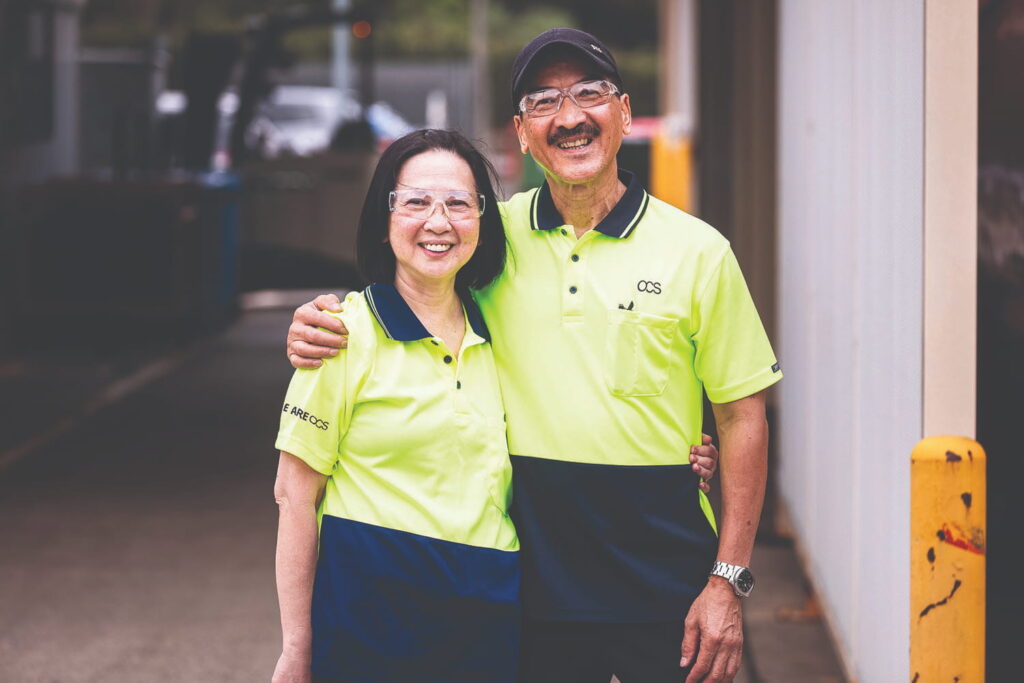
“Traditionally, facilities management was focused on maintenance and keeping assets operational. Today, airports expect a far more integrated service model that combines engineering, hard and soft FM, asset management, sustainability, compliance, passenger experience and operational resilience under one umbrella.”

avatar
Sunil Parate

Senior Vice President, Aviation, OCS India

That evolution is changing not only the breadth of services airports require, but how their performance is measured.

Across the industry, the traditional manpower-led model is increasingly giving way to one focused on outcomes. Service levels, asset performance, passenger experience, resilience and operational efficiency matter more than simply the number of people deployed.

At an airport on the scale of Mumbai, achieving those outcomes means combining specialist expertise with better information, technology and planning.

Critical maintenance and planned works are carefully coordinated around the airport’s live operation to minimise disruption. Preventative maintenance, real-time monitoring and contingency planning help teams identify and respond to issues before they become wider operational disruptions.

“The biggest challenge is maintaining seamless operations in a highly regulated, 24/7 environment where even minor disruptions can impact passenger experience, airline operations, safety and airport performance,” Sunil says.

That makes trust particularly important. Critical airport infrastructure cannot simply be taken offline when maintenance is required. Teams have to coordinate closely with airport stakeholders, work within rigorous safety and compliance processes and respond quickly when circumstances change.

“When every second matters and downtime is not an option, trust is earned through consistent performance, operational excellence and the ability to respond instantly to any challenge.”

It’s also changing the relationship between airports and the organisations supporting them. As operations become more complex, service providers increasingly work as integrated partners, sharing responsibility for operational performance rather than simply delivering individual tasks.

For Sunil, OCS’s growth in aviation reflects that change.

“Our work at Mumbai Airport reflects the depth of capability and commitment OCS brings to critical infrastructure environments. With 800 trained professionals on site, we take pride in being more than a service provider; we are a trusted engineering partner ensuring smooth operations in a 24/7, high-stakes setting.”

avatar
Sunil Parate

Senior Vice President, Aviation, OCS India

Across the wider Asia Pacific region, that operational experience is reinforced by specialists in mobilisation, ESG, QSHE and innovation, allowing knowledge and best practice to move between countries while delivery remains firmly rooted in the needs of each airport.
It’s how global experience becomes local expertise.

Different countries. Different services. Different operational challenges. But the principle remains the same: understanding what matters locally and bringing the expertise, systems and people needed to deliver it.

An innovation the world adopted
Some of OCS’s most significant contributions to aviation have come not from scale, but from paying closer attention to individual passengers.

The clearest example is the Hidden Disabilities Sunflower Lanyard, developed through collaboration between Gatwick Airport, OCS and other organisations, with Raffaella Mauro, now Business Director for Aviation and Gateways at OCS, part of the team involved in its development.

By then, Raffaella had spent years working in Assisted Travel operations and had seen first-hand how passenger needs were changing.

“When I started, aviation was often viewed through an operational lens. Today, every part of the journey is measured by how the passenger feels. Accessibility, inclusivity, technology and customer service are now as important as operational performance. Airports and airlines have become much more attuned to individual passenger needs.”

avatar
Raffaella Mauro

Business Director for Aviation and Gateways, OCS UK

The Sunflower emerged from that growing understanding.

“The idea came from the team at the time wanting to create a simple way for passengers with hidden disabilities to discreetly signal that they may need additional support,” Raffaella explains. “We knew there was a gap for people whose needs weren’t immediately visible.”

The scheme was informed by the Challenging for Change report, which captured the experiences of passengers with disabilities, and developed with organisations including Alzheimer’s Society, The National Autistic Society and Action on Hearing Loss. It was backed by specialist training, with NVQ Level 2 dementia care becoming standard for OCS teams in departure lounges and Dementia Friends Champions trained across airports.

What happened next took the idea far beyond the airport where it began.

“The moment I realised it had gone beyond aviation was when organisations outside airports started adopting it and sharing their own success stories. It became clear that the initiative was helping people in everyday life, not just when they travelled.”

Today, the Sunflower is recognised across airports, transport networks and public spaces around the world.

It’s another example of what global innovation can look like in practice: an idea born from listening to individual passengers, developed collaboratively within one airport and ultimately used to make experiences more accessible for people around the world.

The same promise, wherever the journey begins
From Heathrow to Mumbai, Sydney to Auckland, the geography changes. So do the airports, services and challenges.

What stays consistent is the expertise behind them: people who understand their local operation, supported by experience and knowledge built across a global aviation business.

That expertise is increasingly supported by technology, data and new ways of working. But whether the challenge is maintaining critical infrastructure, meeting exacting compliance standards, reducing the environmental impact of an airport operation or supporting a passenger who needs additional assistance, the purpose remains the same: delivering the outcome that matters.

For passengers, much of that work will never be seen. A boarding bridge works. A bag reaches the right aircraft. A terminal feels clean and calm. The infrastructure behind it keeps operating. Someone who needs additional support receives it at the right moment.

That’s what global reach means in practice: not simply being present in more places, but applying sixty years of experience in ways that make each journey work better.

Because wherever in the world it happens, every journey means something to someone.

Share this story